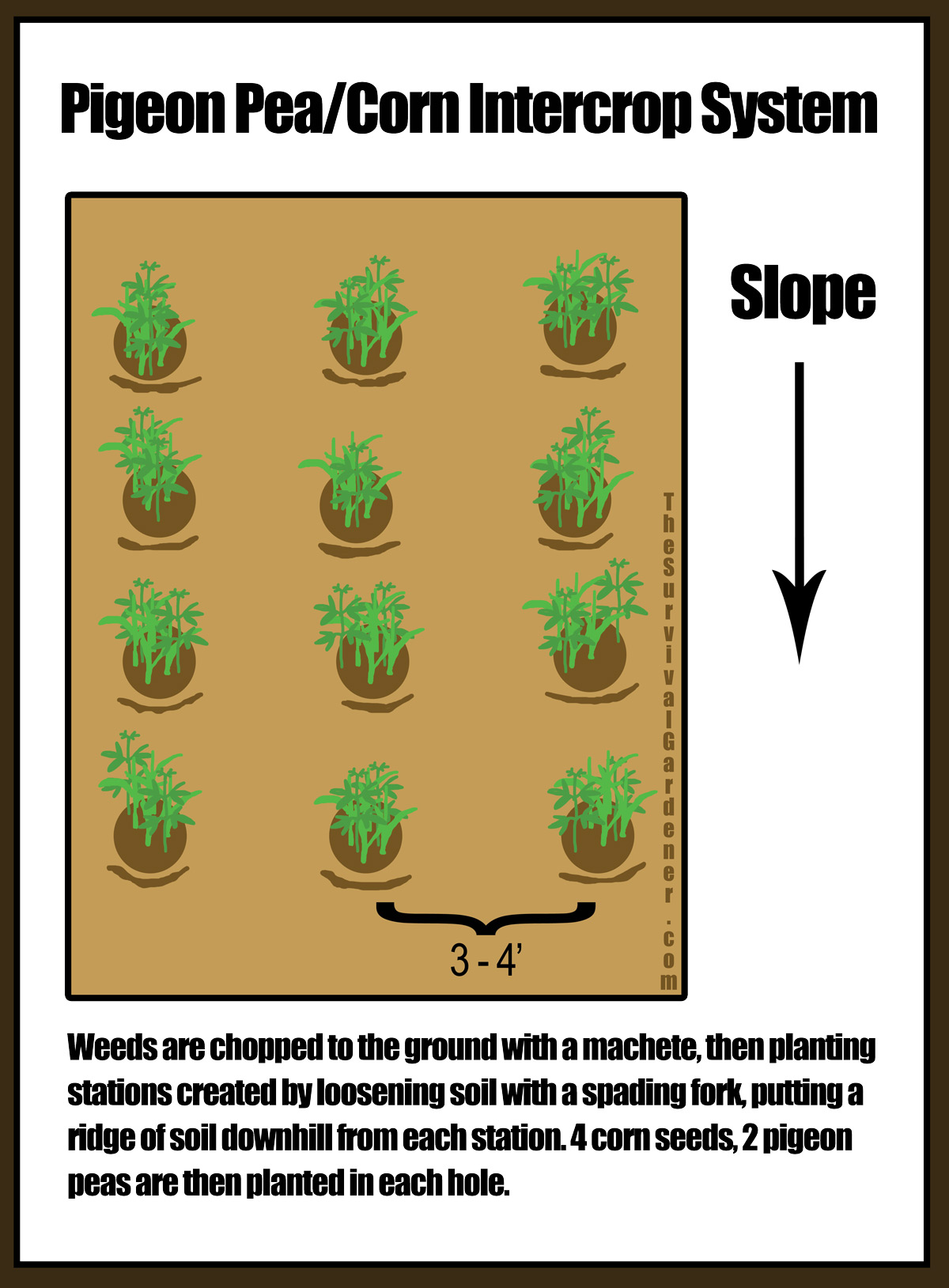
The first round of tropical corn has come in with mixed results. This was the corn we planted along with pigeon peas like so:
I was urged by a local farmer to give them fertilizer — chemical fertilizer – but instead, I gave them compost tea. Unfortunately, I did not give them enough. I planted more than I could take care of and overestimated the time I would have available. It turns out that moving to a completely new homestead in a new country also requires lots of time in paperwork, errands, hunting down tools, and just generally getting settled. With that in mind, the next patch I plant will be closer to the house.
The pigeon peas are looking great. Another farmer told me I will have peas by Christmas. The great thing about pigeon peas: they make their own nitrogen! That means they didn’t suffer from the lack of nutrition like the corn did. Next on the agenda is removing the old cornstalks and dropping them as mulch. There is a lot of string trimmer weeding that needs to take place thanks to the huge weed growth resulting from our monsoon rains.
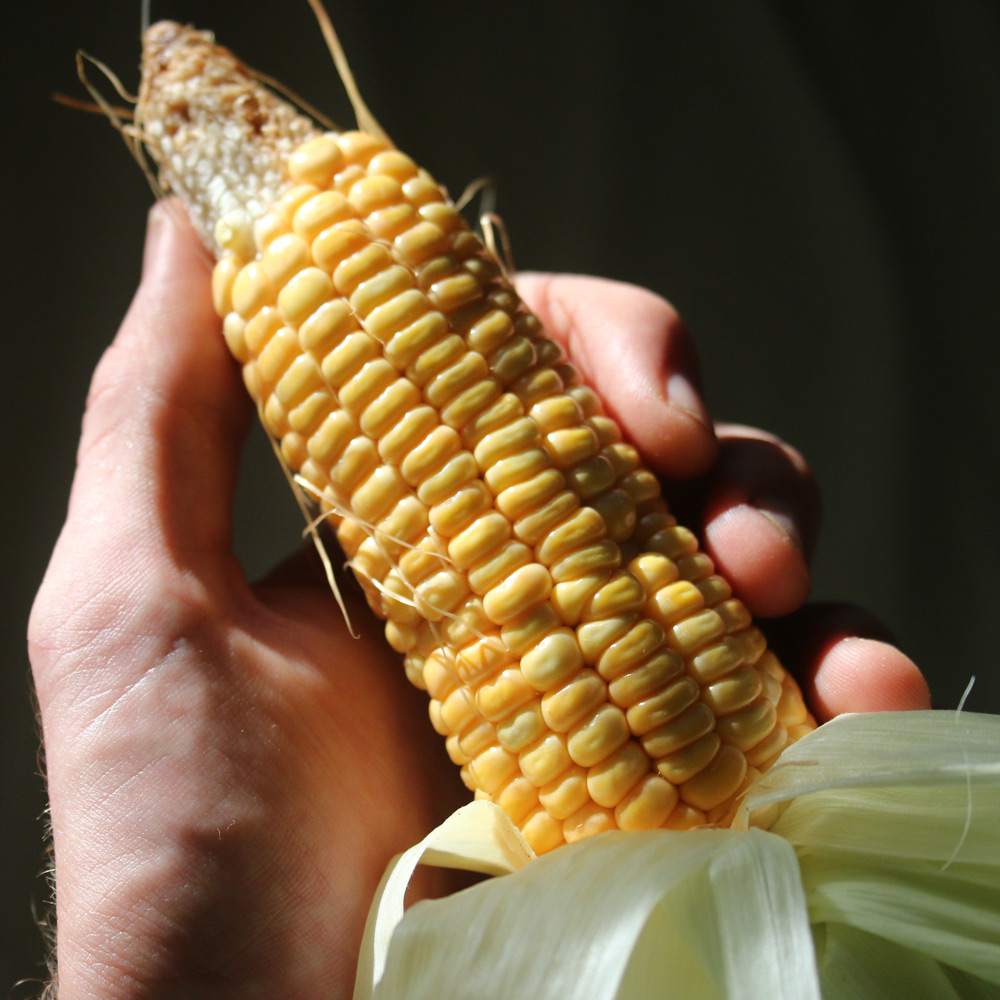
The Missouri pipe corn had a lot of trouble with rotting. Many of the ears were worthless and quite a few stalks failed to produce any ears at all. We did get a few great big ones, though, so I have seed to try again.
The local grain corn we planted down the hillside, as seen in the image at the top of this post, did not have any rotting problems. There was a lot of rain. The problem we had with that corn was rats.
In my latest video you can see what they were doing to the corn:
What I found interesting about this tropical corn variety was its ability to still set plenty of kernels even though some of the ears were quite small. This has not been the case with previous varieties I’ve grown such as Tex Cuban and Hickory King. If the ears are small on those, they often had pollination issues and few kernels.
I’m not sure why the pollination seemed to be so good on this hillside corn patch but my guess is because of the excellent breezes. Corn is a wind pollinated species.
In my next corn patch, I’m going to mix the local grain corn with the Missouri pipe corn and select for large ears.
Wish me luck. It ought to at least be entertaining – and I will feed them a lot more nitrogen this time.

5 comments
If it is any consolation, the corn crop in New York was planted, heavily fertilized :( then no rain. So it stalled out at a foot or two high, turned brown and died. It isn’t even good for cow fodder because of the fertilizer. So they will turn it under to fertilize the land, and try again next year. A total waste this year with no rain to grow the crop.
Nice job listening to your gut about the rat poison. It didn’t sound like a good idea to me either. It was probably the Holy Spirit letting you know, even though you already bought the stuff. That’s the hardest time to listen to that little, still voice. I did send you updated pictures of the Fl. hugle I’m doing, I can’t tell if you get them. I’ll keep sending more as I come along. Thanks again for what you do!
What a mess! Have you tracked down any local landrace corn varieties? I’m assuming you are somewhere with local landrace corn…
Right, some kind of local type I was assured is not GMO.
I’m not sure if you already did this, but you’re meant to chop and drop the pigeon peas, at least once, if you want to release nitrogen to the corn. I always find it tricky with pruning pigeon peas, as I need the mulch, but I also want them to flower to produce peas.
So if you haven’t already done it, next time, you can experiment with cutting back the pigeon peas. You could chop back once with one group, cut back twice with another and possibly go three times – you’re in the tropics so you should get the growth! You can also keep the majority of corn, without cutting back the pigeon peas at all. That way, you still get a lot of seeds. See if it makes a difference to the corn’s development.
I read the pigeon peas release more nitrogen into the soil, the more you cut them back.
Comments are closed.