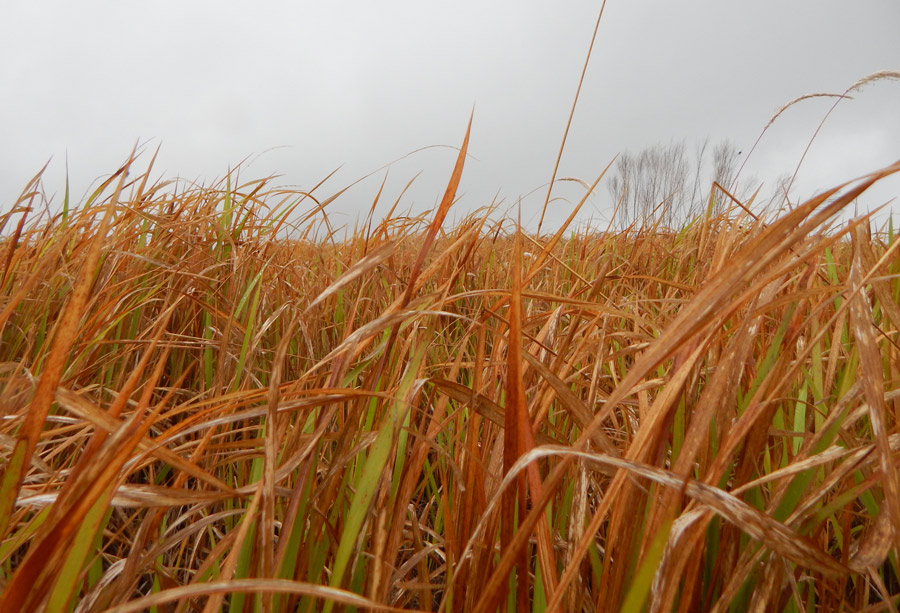
Cogongrass is the worst invasive plant I’ve ever encountered – and I’ve seen some bad ones.
Brazilian pepper has its terrible power of invasion… air potatoes drape themselves over acres of woods… Florida betony (though native to my home state) seems to eat a garden bed in seconds…
…but cogongrass wins my top spot as the worst invasive plant. Ever.
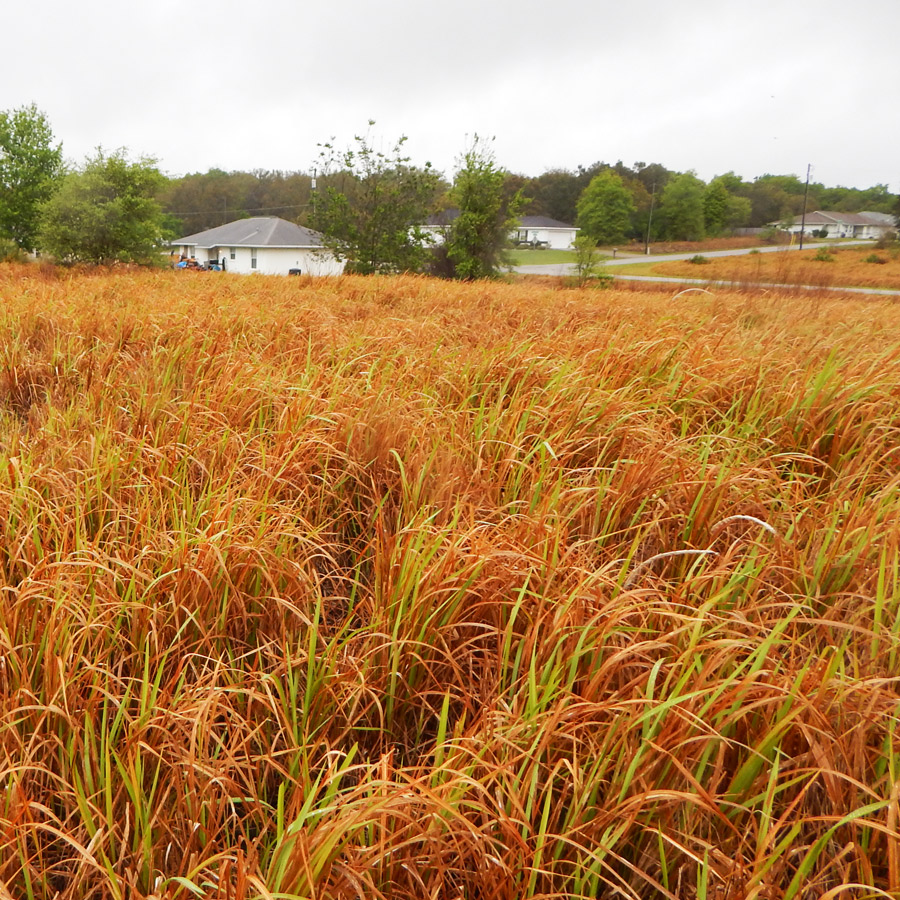
See that picture? That’s what cogongrass does to a field. Let it get a foothold in any lawn, garden, pasture or even open woodland, and cogongrass will take over. So, why do I call it the “worst invasive plant?”
Here’s why.
Why Cogongrass is the Worst Invasive Plant
Now bear with me, those of you who are outside the Southern United States. I can make a case that Cogongrass is the worst invasive species in our area, but I can’t say it’s the worst everywhere. Plants take over different climates. In the Midwest, as an example, you’ll be fighting completely different invasive species, such as common buckthorn.
Yet down here, we’ve got vigorous species from all over the subtropical and tropical world that have crept in and attacked, and out of all those, I’m calling out cogongrass as the worst for multiple reasons.
Here’s why.
1: Cogongrass is a Lousy Grass for Animals
Think you’ll just graze goats or cows to make lemonade out of the cogongrass lemons you’ve been given? Nope. You can count out that use.
Again, according to UF:
“Cogongrass has been used in Southeast Asia as forage because it is the dominant vegetation on over 300 million acres. In these areas it was found that only very young shoots should be grazed or cut for hay. At this stage, the leaves lack sharp points and razor-like leaf margins. For about four weeks following a prescribed burn, crude protein of regrowth is comparable to bahiagrass. Crude protein of mature stands rarely attains the minimal 7% level needed to sustain cattle, making supplementation essential for livestock production. Cogongrass yields are relatively low, even under heavy fertilization, and usually do not exceed 5 tons per acre.”
2. Cogongrass Forms Dense Monoculture Patches
Cogongrass seems to be allelopathic, poisoning other species and becoming the top plant quickly. It also simply chokes out the competition.
Check out this video I posted recently showing how cogongrass has eaten big chunks of land southwest of Ocala:
3. Cogongrass is a Fire Hazard
Cogongrass burns hot and fast, which is one of the ways it keeps its dominance. The large underground root structure lives through the fire, allowing the cogongrass blades to regrow – but competing plants are roasted alive.
4. Cogongrass Will Eat Your Garden or Food Forest
Trying to get trees and plants established alongside a cogongrass infestation is very hard. The big root system of cogongrass takes water and nutrients for itself and will quickly out-compete your crops and even your trees, starving them of minerals and water.
5. Cogongrass Makes Running Bamboo Look Tame
The pointed rhizomes of cogongrass can drive through hard soil, nursery plastic and even right through your sweet potatoes (I know this from experience). I’ve heard from a friend who works for the state that the rhizomes can travel as far as 15 feet from the mother plant.
As UF writes in their article on cogongrass:
“There are many reasons why cogongrass is such a prolific invader. It is a warm-season, perennial grass species with an extensive rhizome root system. In fact, at least 60% of the total plant biomass is often found below the soil surface. In addition to the rhizome root system, cogongrass adapts to poor soil conditions, and its fires burn so hot that they eliminate nearly all native species. Cogongrass is drought tolerant and has prolific wind-dispersed seed production. Additionally, it can grow in both full sunlight and highly shaded areas, although it is less tolerant to shade.
Cogongrass spreads through its creeping rhizome system and seed production. The rhizomes can penetrate to a depth of 4 feet, but most of the root system is within the top 6 inches of the soil surface. The rhizomes are responsible for long-term survival and short-distance spread of cogongrass. Long-distance spread is accomplished through seed production. Seeds can travel by wind, animals, and equipment.”
Nasty stuff – and very hard to eliminate… which is my next point.
6. Cogongrass is Very Hard to Eliminate
Once you’ve got cogongrass on your property, getting rid of it is a big deal. The rhizomes are tenacious and getting them all pulled is tough. It also spreads via seed and will pop up here and there in other places if you let it bloom. I’ll write more on killing cogongrass later in this post.
For now, how do you know if you’re dealing with cogongrass on your property? Identifying cogongrass is easy once you’ve seen it once and know what to look for.
How To Identify Cogongrass
If you think you might have cogongrass, the easiest way to tell is to look at the leaves. Cogongrass leaves have offset mid-ribs, meaning that the central line running down the blade of grass is further to one side than the other.
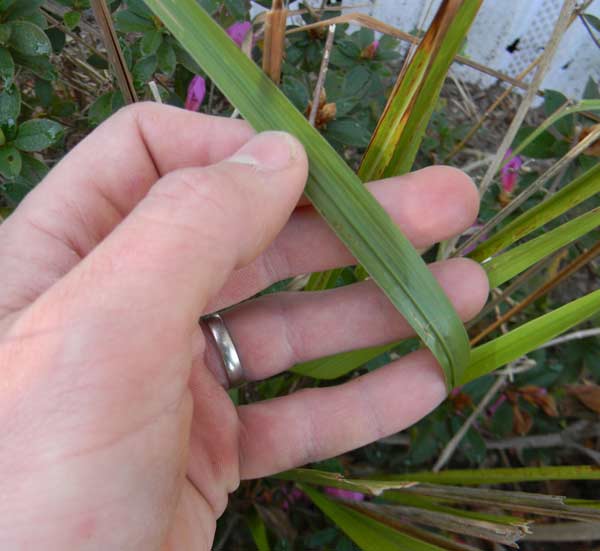
Here’s a scanned close-up I made of the offset midrib on cogongrass:
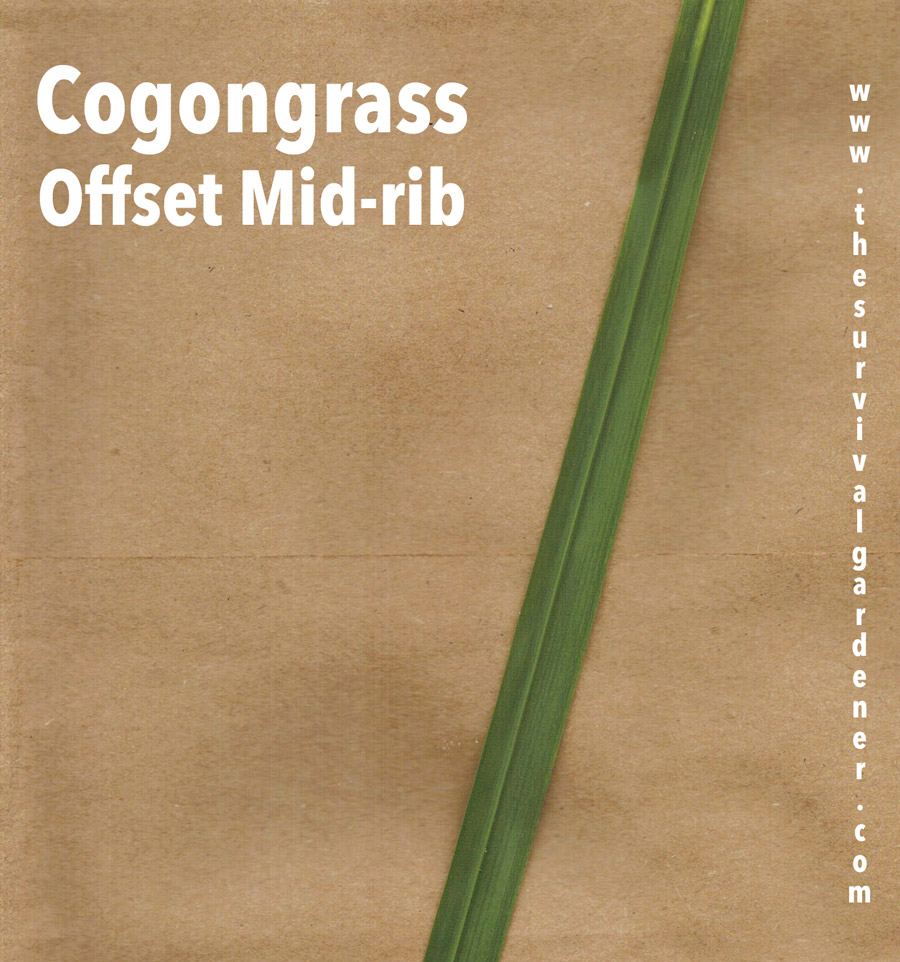
The offset mid-rib on the second blade of cogongrass isn’t quite as pronounced as the offset on the first image. I think it was hoping I’d mistake it for St. Augustine. No such luck, evil grass!
Another notable feature of cogongrass is its jointed rhizomes with sharp points on the new growth:
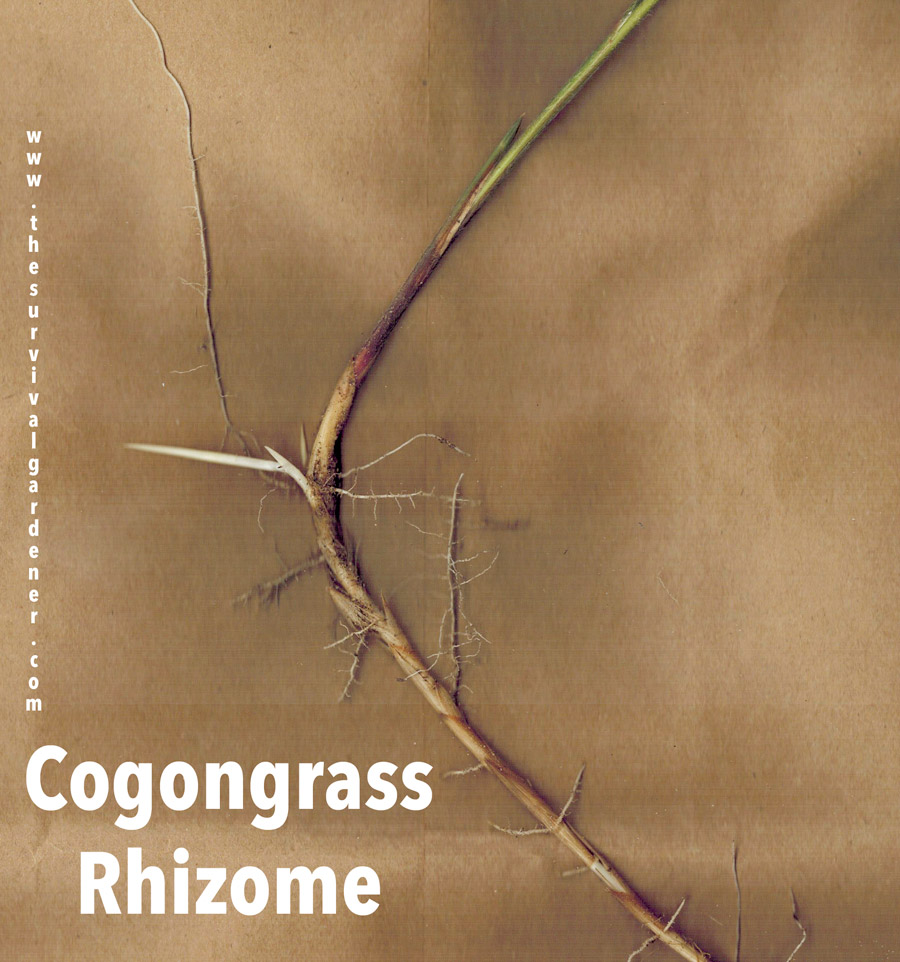
And here are what cogongrass blooms/seed heads look like:
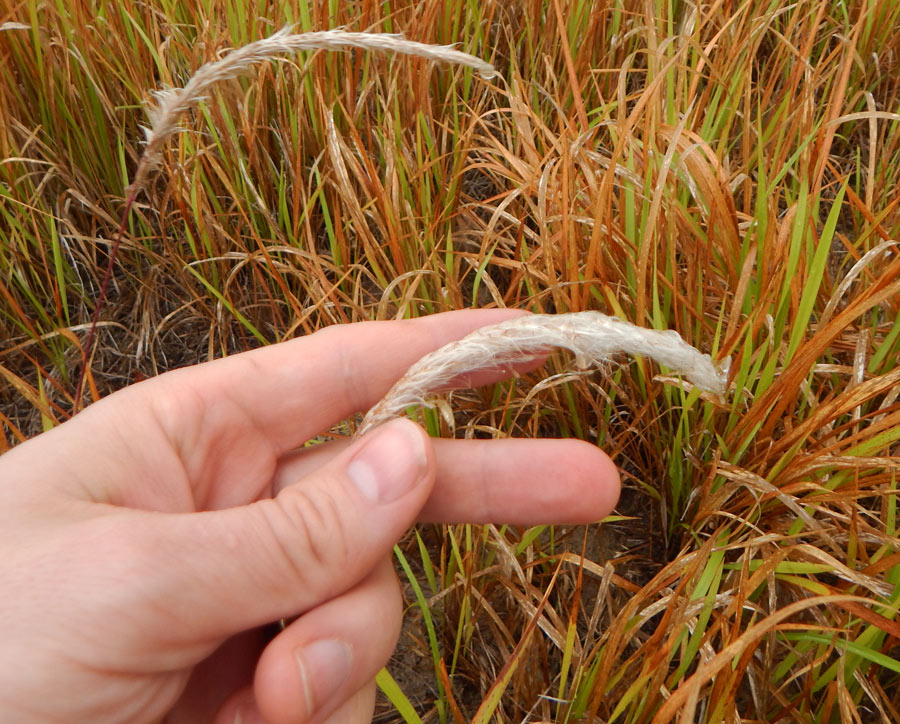
Armed with these images, you’re ready to identify cogongrass in the wild… or in your rose garden.
Now that you know what it looks like, how do you get rid of cogongrass?
Killing Cogongrass
I have a terrible confession to make.
A confession so terrible that it’s likely to make half of my readers go away, my YouTube channel views to dry up and my newsletter subscribers to unsubscribe en masse.
I bought and used RoundUp(TM) to control cogongrass. It’s the only time I’ve done so on my property. I hate weedkillers and all they stand for… but cogongrass was going to win if I didn’t take drastic measures.
Here’s how it played out.
A few years ago when I launched my (now defunct) nursery, there was a small patch of cogongrass in my back yard near where I planned to put my potted plants. I didn’t know how to identify cogongrass back then. In fact, I didn’t even know what it was. I was blissfully unaware of the patch and how quickly it could spread.
The state inspector came by, saw the patch and told me I couldn’t get a nursery license unless the cogongrass was completely eliminated and she recommended repeated treatments with glysophate (the active ingredient in RoundUp).
I asked her if there was a way to get rid of cogongrass without toxic chemicals. She told me I could maybe dig a pond there, but that was about it.
Stubbornly sticking to my principles, for the next few weeks I decided to attack the cogongrass with spade and fork. I started digging and chasing rhizomes, only to have blades pop up and new patches emerge nearby. I realized that I wasn’t going to beat the stuff quickly enough to get my nursery started, so I finally gave in and bought RoundUp. After the first application, most of the cogongrass died. A few patches reemerged, then I sprayed again.
Eventually it was gone and the inspector approved my nursery plans.
Now, however, since I quit using weeedkiller, cogongrass has popped back up here and there around my yard and food forest, growing faster than I can pull it. I warned the new property owner and confessed my RoundUp usage when I sold the house, so she’s keeping an eye on the cogongrass now (I hope).
Once it gets in, it’s hard to wipe out.
Tilling it repeatedly can kill it off, as can painstaking double-digging – but for control that won’t break your back and possible take months or years, you’re stuck with this stuff. Ack.
And that, my gardening friends, is one more reason why I argue cogongrass is the WORST invasive plant!

12 comments
Up here in the San Juan Islands of Washington we also have something like this that grows by the beach. Maybe it washed in with the tide? My next door neighbor went for that “beach look” and planted it in his yard. I found it impossible to remove along my property line, fought it with chemicals with zero success. Fortunately my cement driveway, house foundation and poured cement property line wall has stopped it. I seeded in marjoram and last fall I put down thick chipped cedar topped with interesting driftwood I collected. The marjoram survived and it looks pretty darn good. The neighbor across the street can’t stand the stuff and though it never bothers him he writes complaints to the Home Owners Association all the time wanting it removed. My personal battle that I brought on myself is with horseradish. Those roots have to run out of energy some day!
The only thing I can think of that’d possibly help battle this grass without toxic chemicals would be to lay thick sheets of plywood over your entire effected area with a substantially large area covered past the actual infestation. Since it can spread 15ft from the mother plant. It may be able to come up through fabric but it ain’t coming up through a half inch piece of wood! Leave it sit for six months just to be dead sure its smothered and call it a day. Rather expensive but if it wasn’t treated wood no chemicals involved.
Not a bad idea.
David a while back you sent me some velvet bean seeds.Since then I continue to learn about this valuable plant.Check out this link http://www.feedipedia.org/node/270 scroll down to weed control.There is a reference to controlling this monster weed.I have not tried or found any other references as how to approach it .I would probably mow,weed kill,then plant velvet bean very dense.16″ on center.It would probably out grow it and smother the cogan grass.
Hi Byron :)
In my experience velvet beans will outcompete CG (even if planted 2 or 3 feet apart) but once they die in the Fall it comes back. The best way to control it I found so far is to mow it continuously throughout the winter and plant something else in the area (bahia kinda works) just before the rains start. When you plant you should try not to disturb the soil, so I’m talking drill seeding or a subsoiler on contour. If you plow or disk it you’re helping the GC. In small areas I use a metal stake to make shallow holes or just spread seeds mixed with manure over GC cut really short and drag a chain. Aggressive trees like poplar, coyote bush or willows will outcompete it too, eventually (the key word is “eventually”), if the growth is dense enough. I also noticed that CG hates compaction and will lose to bahia in frequently traveled areas as well as in the areas with rich soil.
Now, let’s not forget to say big “thank you” to the brilliant ag scientists, who brought it to FL and planted acres of it because it makes such a great packaging material for oranges. Also, let’s think about GC when you hear someone in a lab coat bumbling on about the newest completely safe biotechnology that’s absolutely positively does not have any side effects.
Awesome, Leon – thank you for the data.
I can absolutely say it is the worst–and it is taking over my yard and garden. Everywhere we have cleared trees on our property, it has eventually jumped in. After seeing your videos on the food forests, I’m wondering if a food forest may be a way to get rid of the CG? Would it shade it out? I don’t want to use Round-Up because we tried that a few years ago–the great “free” program to get rid of CG–and I got really sick. We live near Mobile, AL. I’m really intrigued by the idea of a food forest. We have a wonderful climate and we can grow a great variety of plants. I just have to figure out what will outdo the cogongrass. Thanks!
[…] is a horrible weed. Learn to identify it here. If it’s on your property, get rid of it. To hope that your goats eat cogongrass instead of […]
[…] don’t recommend it. The only plant I’ve ever used herbicide upon in recent memory is cogongrass – and only because I needed to get my nursery open and I could not remove it all by hand. If […]
I have been fighting CG for three years now. I help with the landscaping in my neighborhood I have one large round flower bed that CG had taken over. The fist year was a killer, it took weeks to get the CG out chasing down each root system. Second year it was a little less but I ended up having rotator cuff surgery on my right should I am sure weeding CG was a big reason for the three tears. This year I am back at it again and have been thinking if I could put a border that would go completely around the flower bed to stop the CG from coming back into the bed might help. Do you think this would work and what would you recommend? I went to the hardware store and found some 12′ long X maybe 2-1/2′ wide vinyl siding that would go a house it seems flexible enough to make the round curves at the ends of the flower bed. Please let me know your thoughts.
My problem with this horrible grass is that a large flower bed is becoming infested with it. Making the problem worse is the fact that I have these variegated ornamental grasses that are becoming infected with it which makes it hard to manually pull out. I’m thinking if the kg that comes up surrounding it is treated with Roundup it perhaps might travel to the roots attached to the Kogan. However, I’m not sure of the right way to go about trying to apply it without affecting the surrounding plants. Is there any hope that I can ever get rid of it? There goes my “yard of the month” sign!
If you are pulling it every day, you may be able to win. But it is really, really hard to get rid of that way. You may have to go scorched earth and start over with your grass.
Comments are closed.