A few years ago I helped some friends start a food forest near Orlando.
Last week the owner sent me some photos from this project and said I could share them here. Things are really starting to grow up – it’s amazing what a bit of time can do, particularly when you start a food forest on decent soil with lots of mulch.
The area where this food forest is located is surrounded by citrus groves and swamp. The soil has a good organic matter content with black muck mixed into the sand wherever you dig.
It’s hot and the air is still, however, so despite the decent (though sandy) soil, it’s not the easiest place to grow a food forest. The area is in between tropical and temperate, with at least a few freezes each winter that keep the owners from growing great tropical fruit like sapotes and mango… but not enough chill hours for good temperate fruit trees like apple and pear.
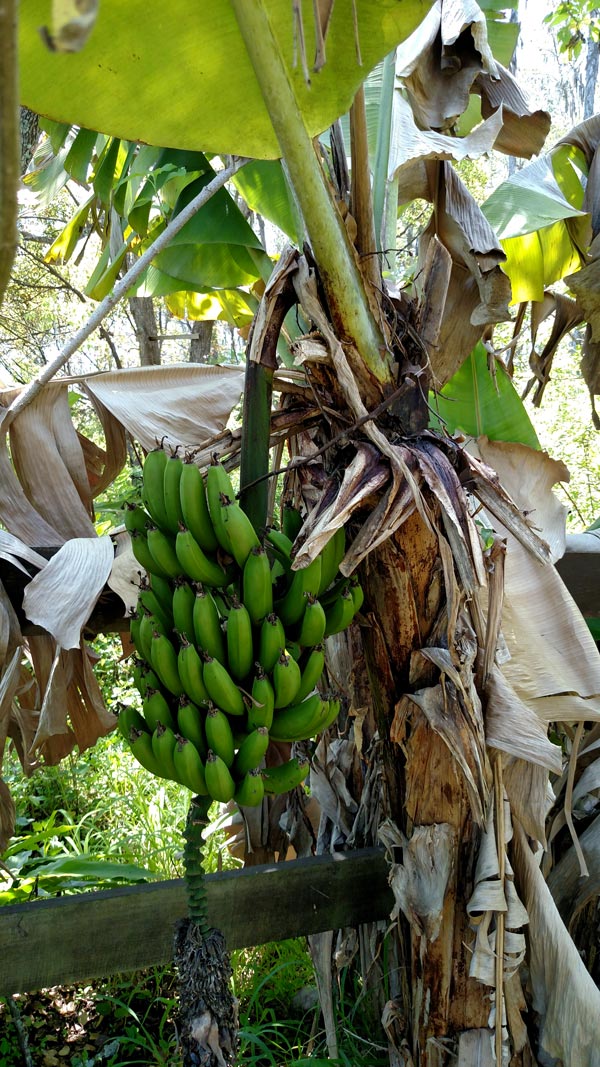
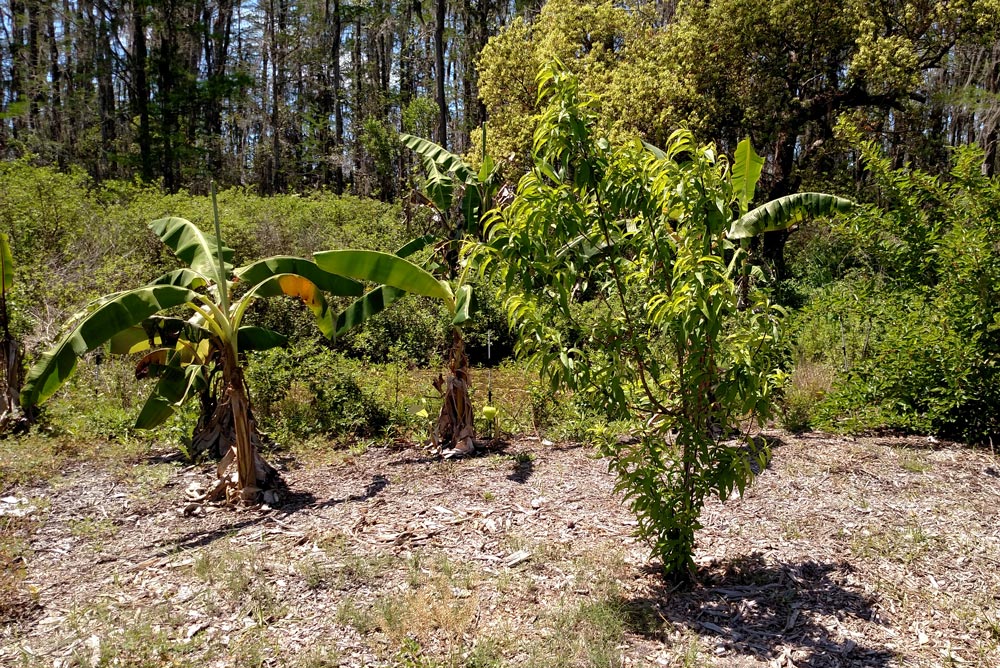
That said, the few freezes in winter haven’t hurt their banana crops too much:
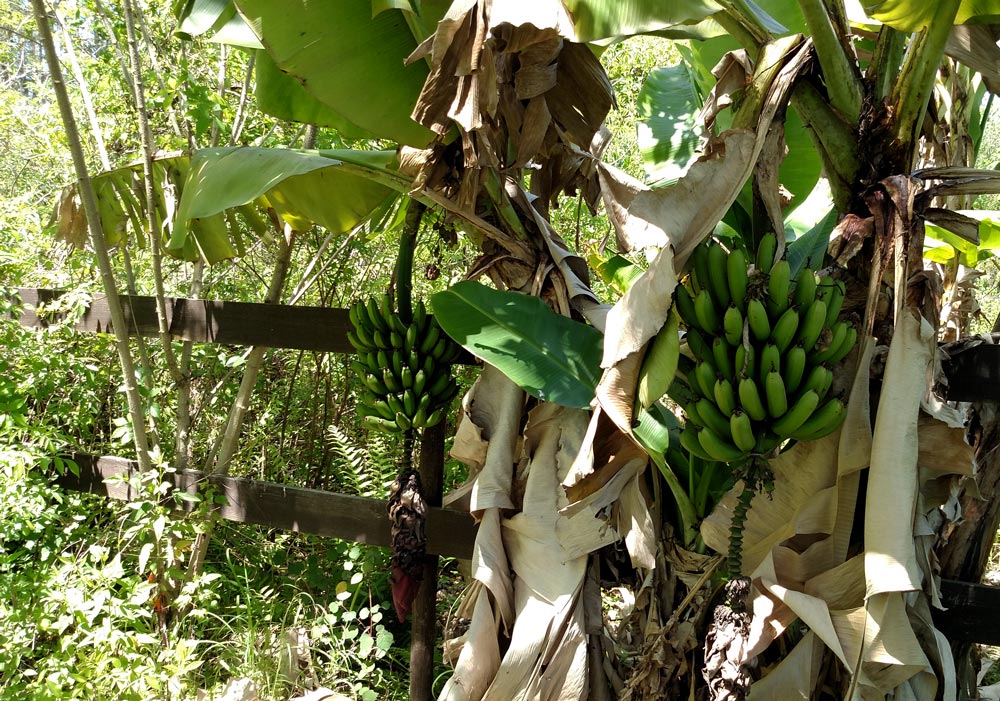
Those are “Dwarf Cavendish” banana trees. They also have some of my previous collection of bananas, including “Raja Puri,” “1,000 Fingers,” “Ice Cream”, “Orinoco” and even Cheeseman’s Banana, which is a wild type that’s more of an ornamental than edible.
Another difficulty when growing a food forest near Orlando is the brutal summer heat. To head off the weeds and the hot sand, the homeowners dumped tons of mulch from a local tree company.
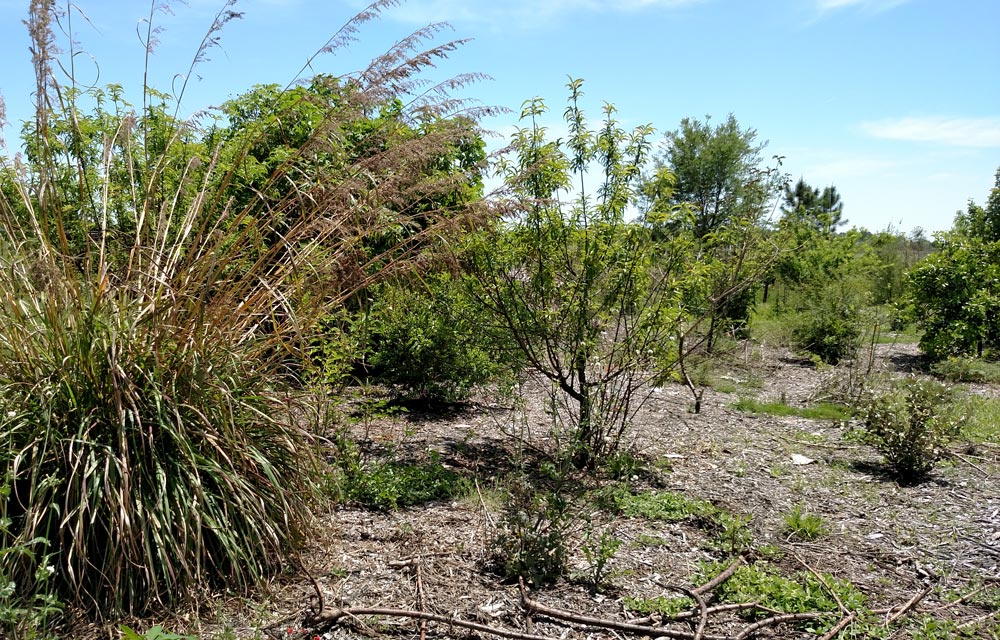
The mulch adds organic matter, keeps roots cool and conserves moisture. It just took a lot of work to acquire and then spread around, particularly considering the half-acre size of this food forest project.
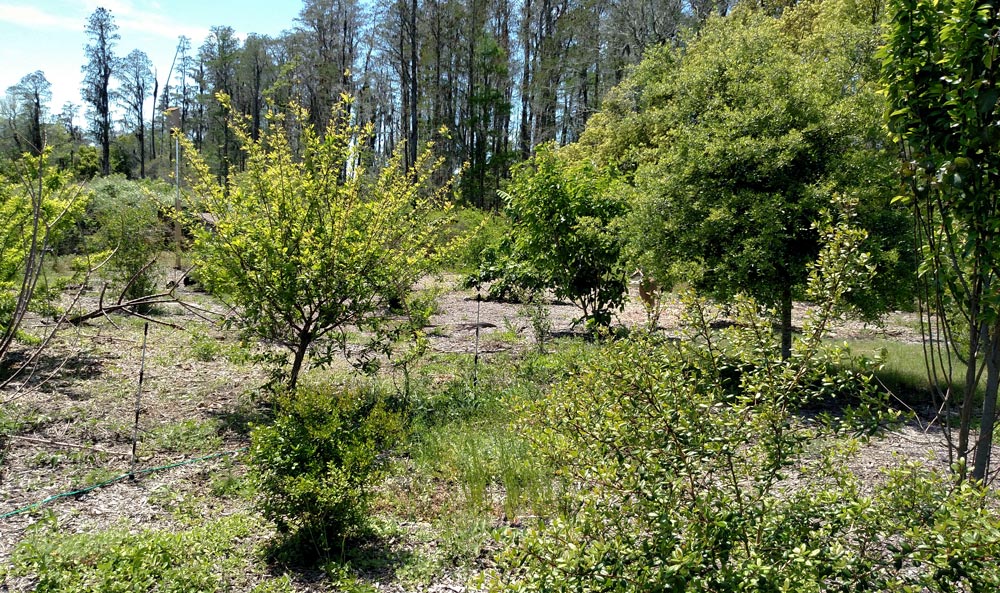
Right now the food forest is at what I call the “bad haircut” phase, where it’s in between being perfect little trees surrounded by an ocean of mulch… and a full-on, cool forest with a close-to-closed canopy.
If you’ve ever decided to grow your hair long from a short haircut, you know what I mean. Nothing quite looks how you want it to until it reaches the right length.
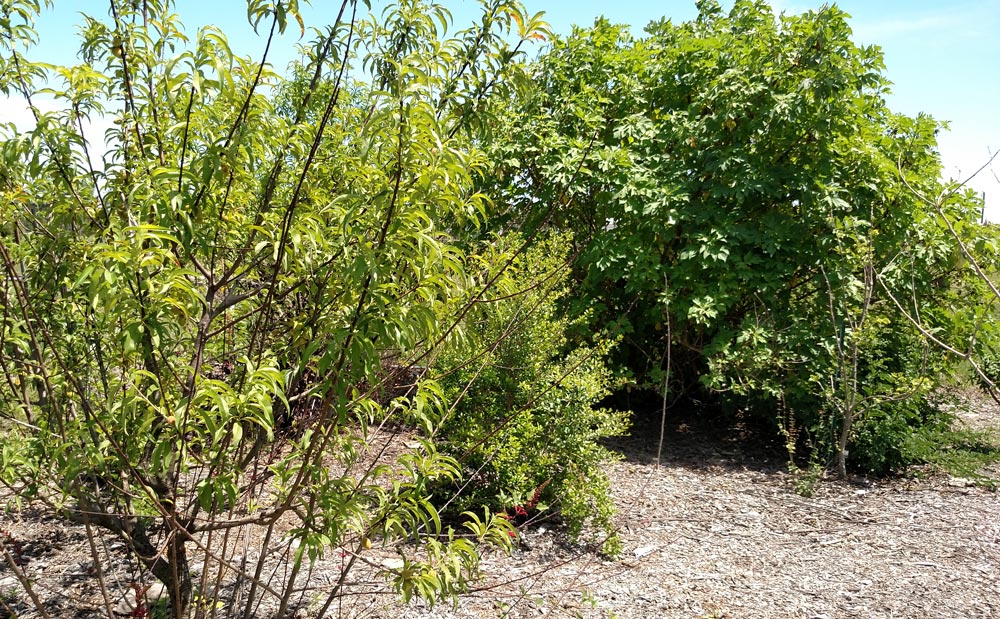
By next spring, this system is going to really look amazing. Check out the fruit that’s coming in now:
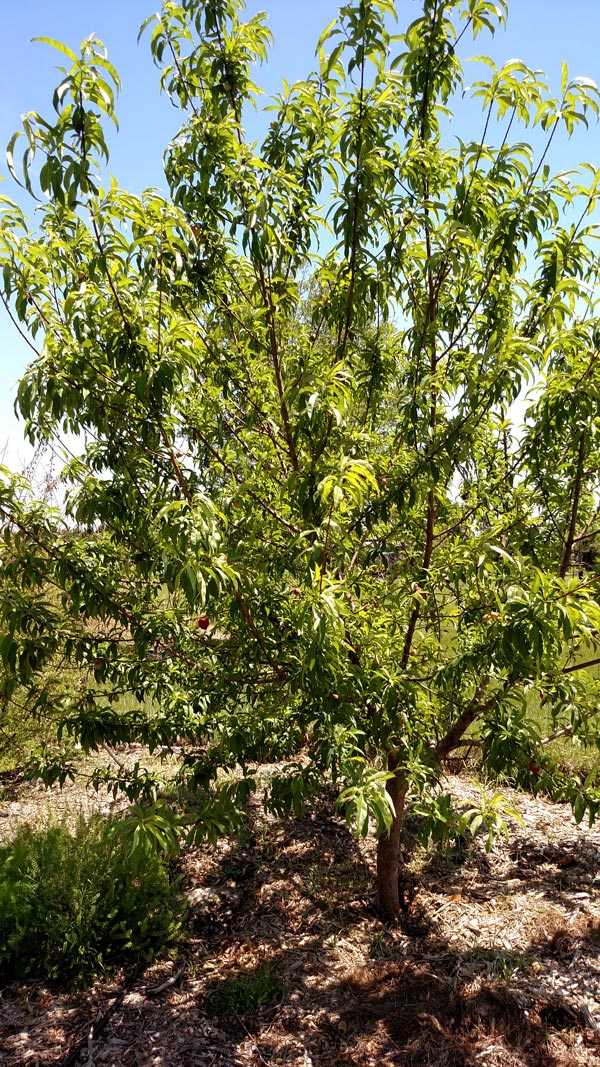
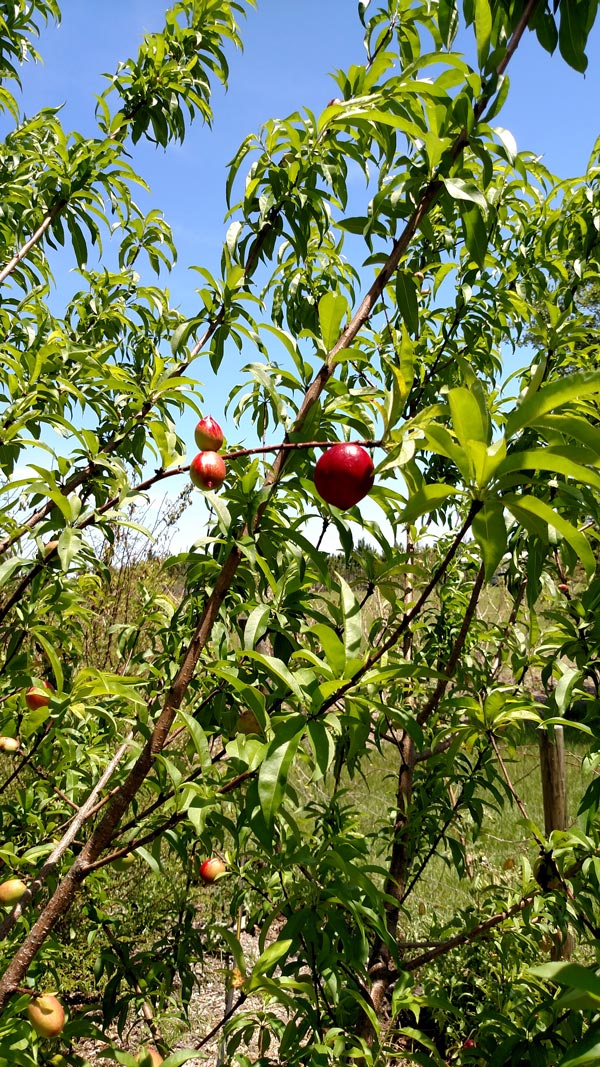
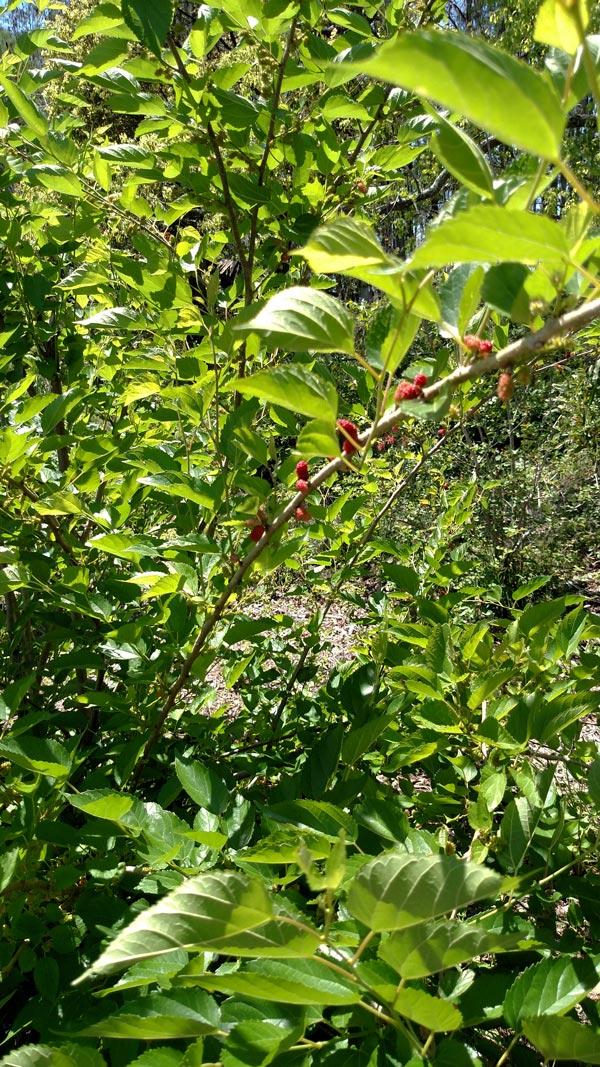
Peaches, nectarines and mulberries in abundance.
When I plan out a food forest for a client, I always like to include some fast-producing trees as encouragement. Mulberries, figs, nectarines, peaches… these will start paying their rent quickly. At the same time, I try not to overlook producers that take their time, like pears (6 years) and pecans (8-10 years). When new fruit come in every year, it builds enthusiasm. I really can’t wait to see where the progress will take a food forest next.
This Orlando food forest is one of seven food forest projects I’ve provided assistance or plants for, not counting the many others I’ve helped indirectly through my books and this site.
There’s a reason I named my business “Florida Food Forests!”
I hope to expand my food forest consultation into some new climates, too. I think it would be amazing to create one in the arid Southwest… or one in Quebec! The possibilities for species… my goodness…
More Pictures from the Orlando Food Forest Project
I wish more yards looked like this:
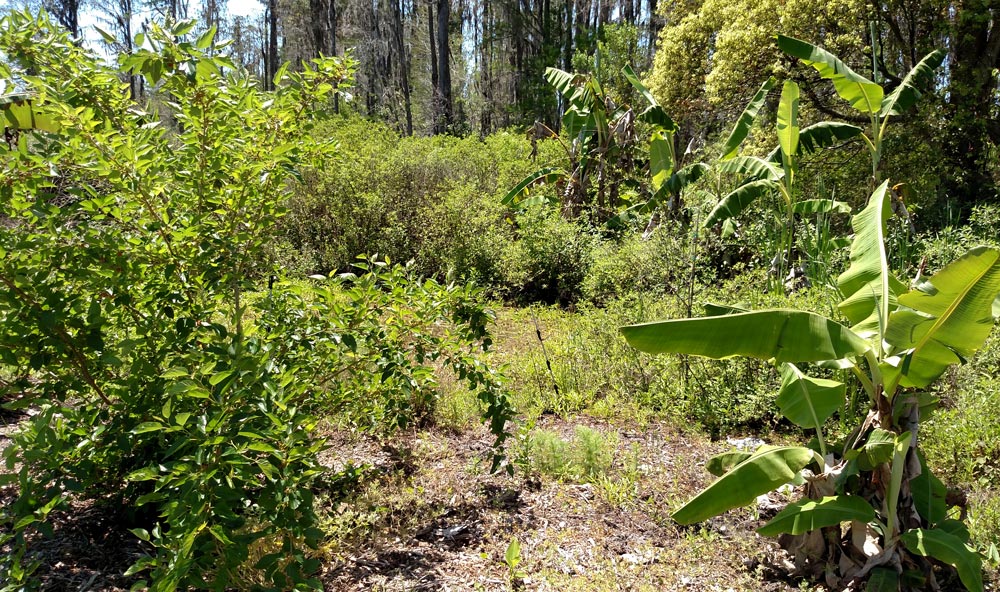
Mulberries, bananas, native weeds…
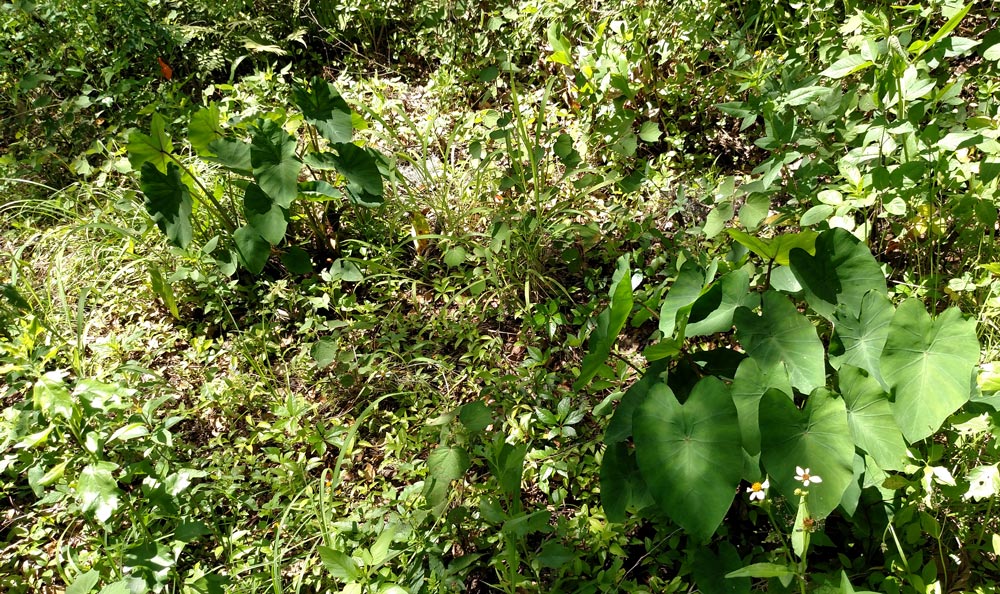
And here – check out this malanga growing along with Bidens alba and Caesarweed:
Here’s a patch of beautiful variegated ginger: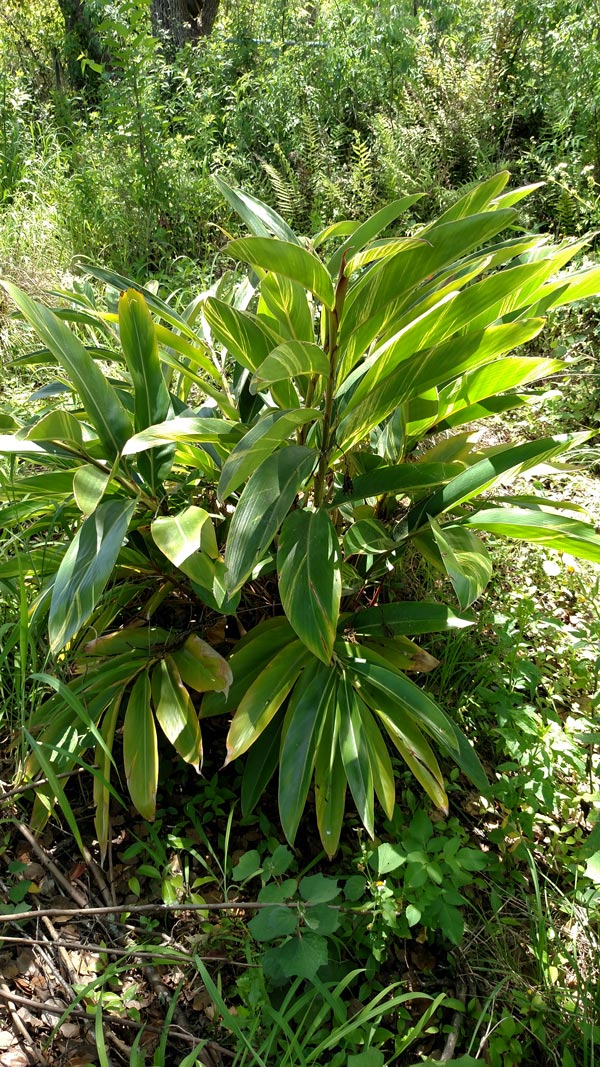
That ginger makes a very nice herbal tea – great flavor – though the roots aren’t big enough to use for anything.
Here’s another “bad haircut” shot:
I like this lush patch of green with gingers and blooms:
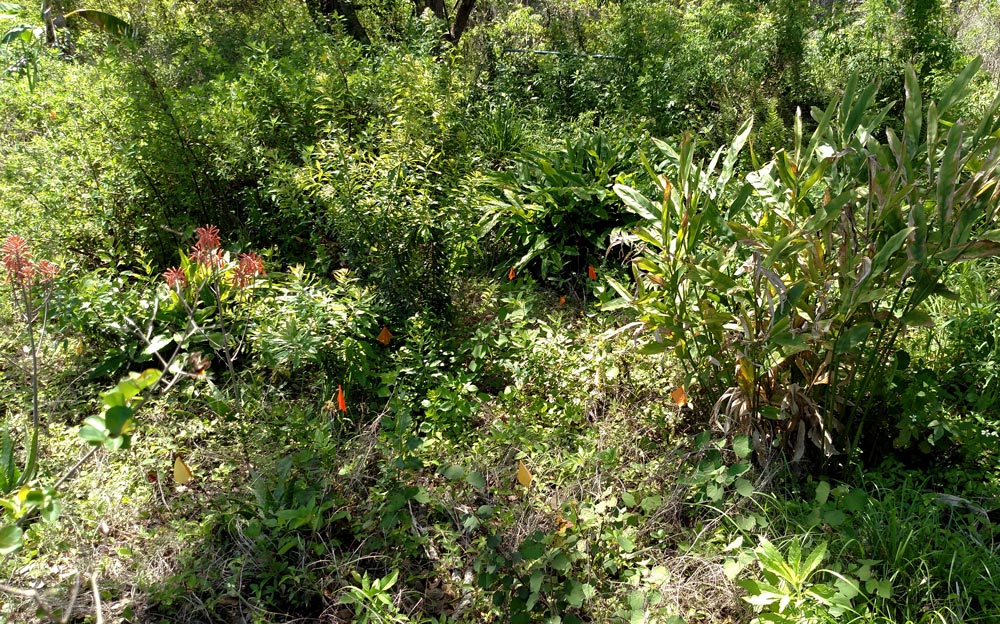
Having lots of species growing together helps fight pests. You can bet there are good insects, amphibians and reptiles all over the place in these un-mown places, just waiting to come in and gobble up evil aphids and caterpillars!
Here’s another shot of some producing bananas:
Check out this kale and ginger growing in the shade – it almost looks like a watercolor with the splashes of light dancing through the canopy: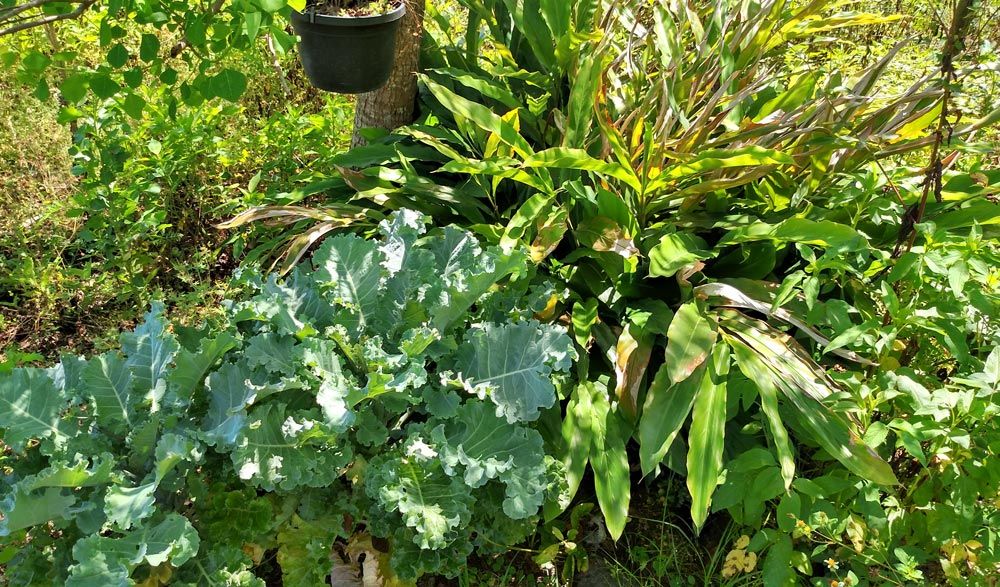
Here’s another good mix of plants next to the greenhouse:
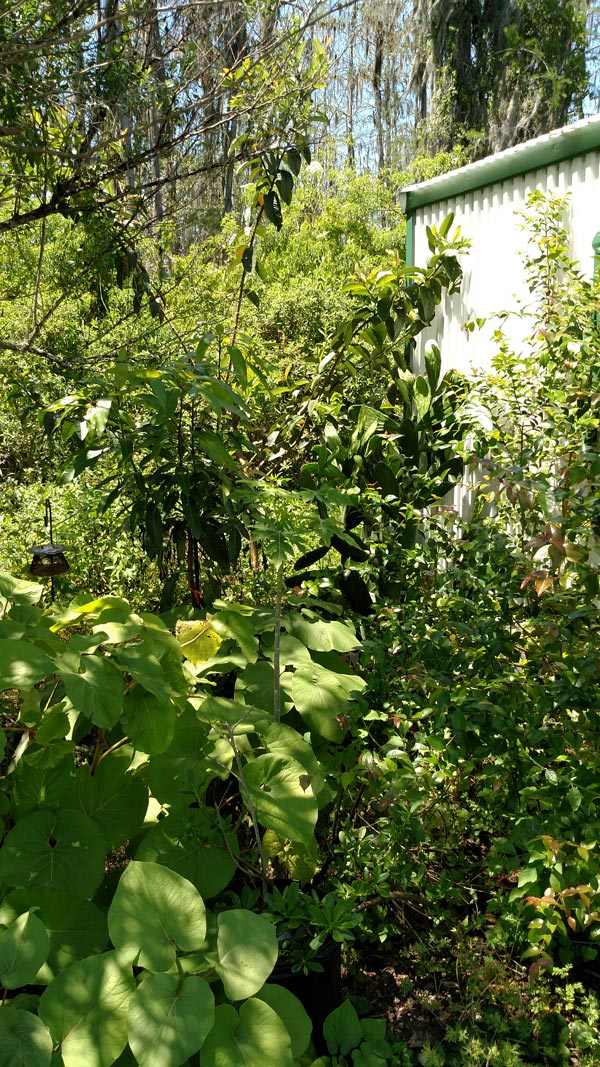
In the photo above I see guava, nopale cactus, rootbeer plant, Surinam cherry, papaya and mango. Looks like a pleasant little microclimate to me.
Here’s another shot of the thriving root beer plant colony:
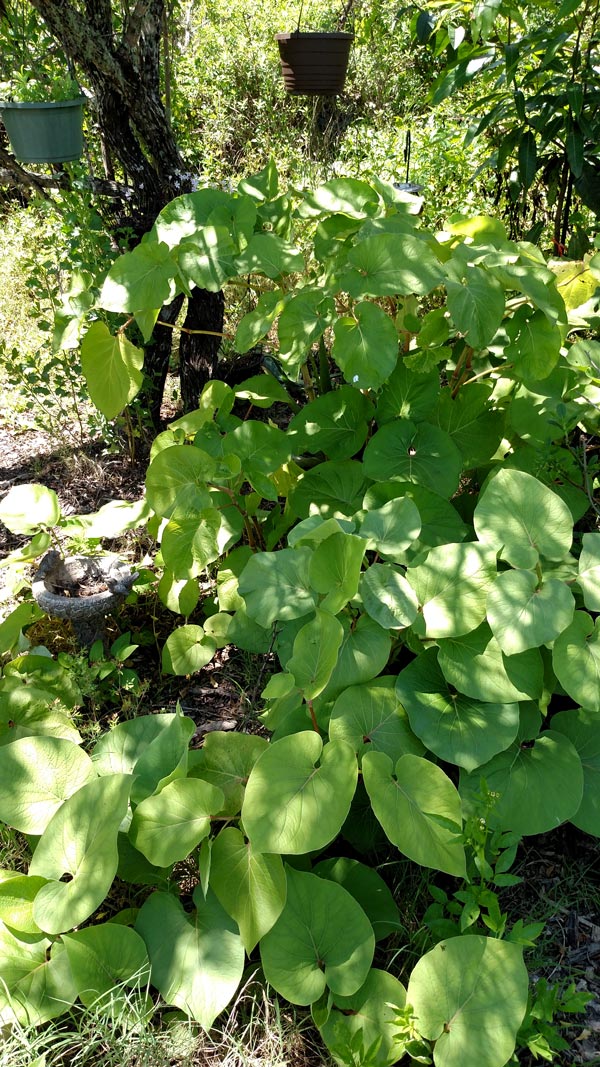
And more crazy growth: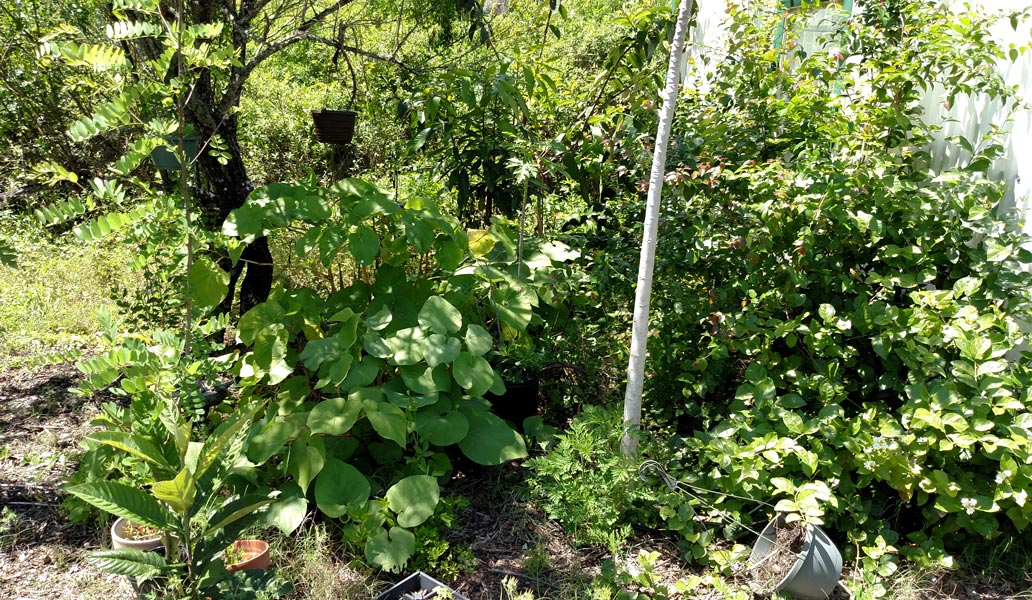
Now check out this sugarcane, with a cassava in the foreground: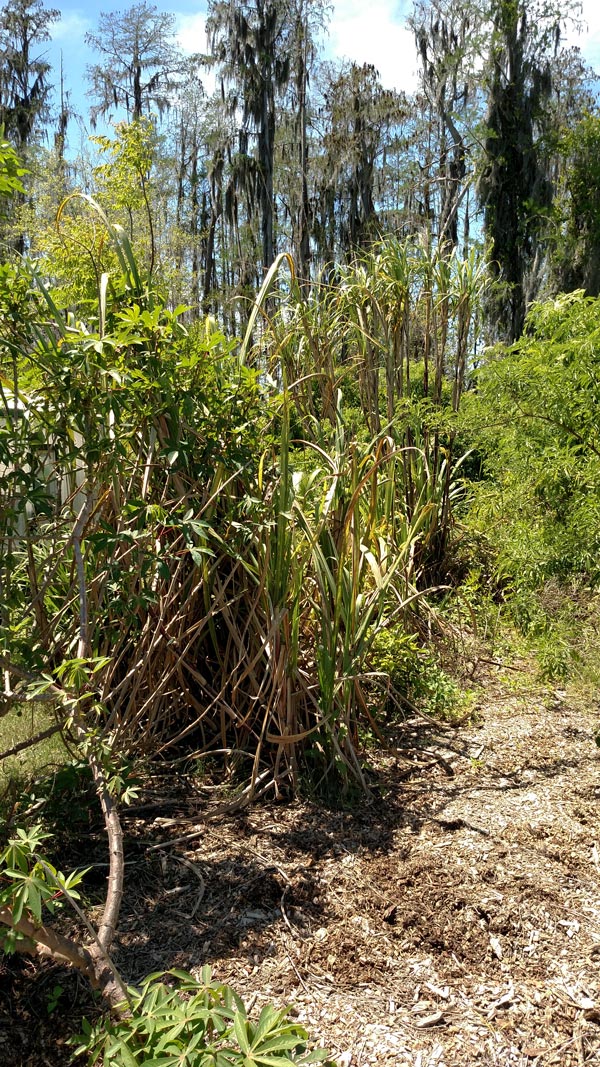
And a beautiful loquat, encircled by wild blackberries: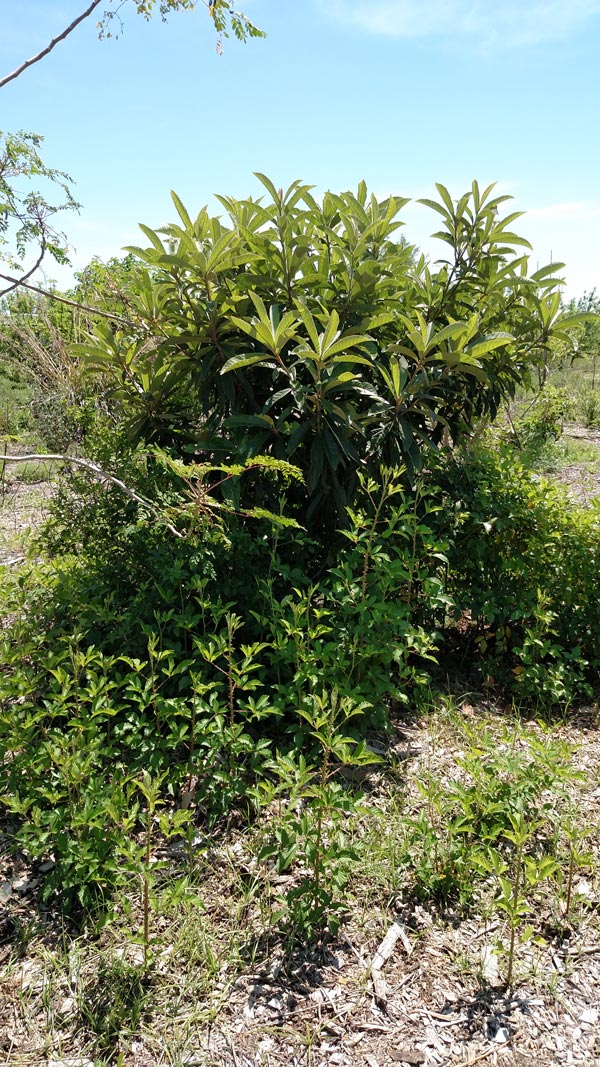
With some jealously, I note that their moringa trees are setting pods: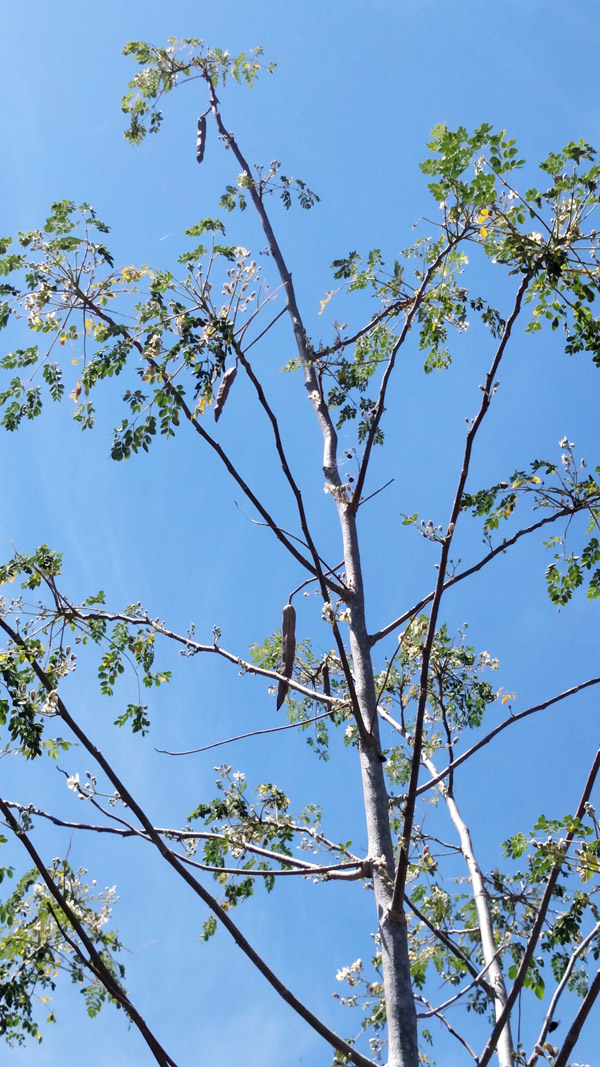
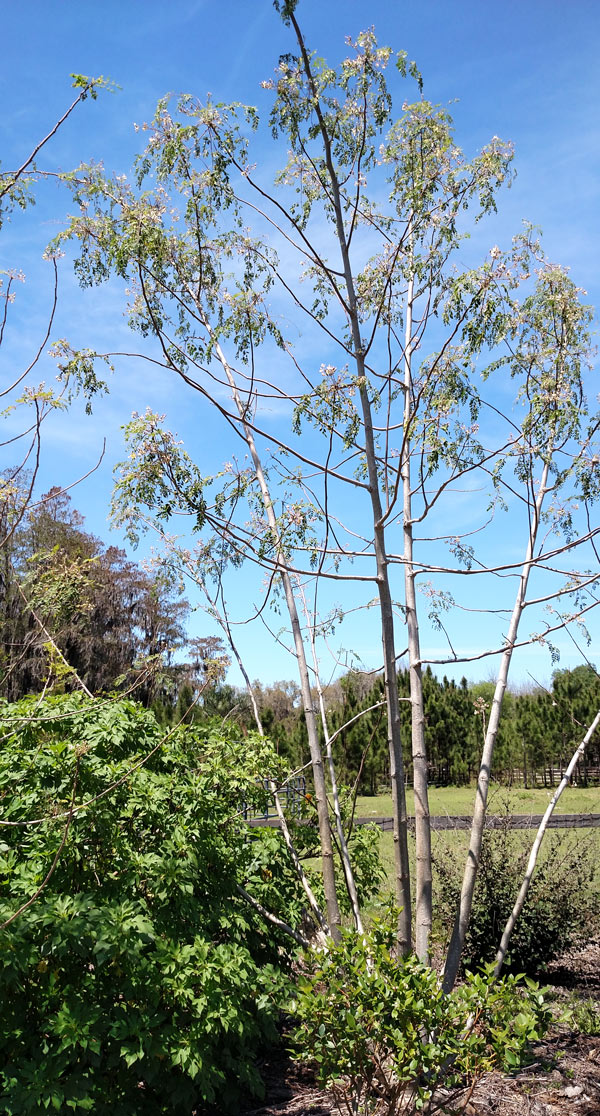
Truly beautiful. This area was just hot, empty pasture a few years ago and now it’s rapidly being transformed into a cool, moist forest of beautiful and useful species.
I can’t wait to see what happens next!
If you live in Florida and want to plant your own food forest, I have helpful species lists and encouragement in my short book Create Your Own Florida Food Forest – you’ll enjoy it.
This level of crazy gardening may not appeal to everyone, but I salute those of you who are creating food forests across the state. Florida wants to be forest – grow with nature, instead of against it, and you will have more food than you know what to deal with. That’s a great place to be.
(All photos by the homeowner)

10 comments
Really a beautiful thing to work with a system that mutually benefits both man and nature. It is refreshing to see some examples of these systems in action. The environmental conditions of this food forest are very similar to the one I am working on at my homestead currently which makes this very useful to me indeed. Thank you. The client can easily fill some of the empty space between his trees with pigeon pea, cow pea, and other nitrogen fixing species which will easily take root and self seed in the mulch. I did this as well even tried lab lab but am finding it very invasive tending to want to climb over everything seeding like crazy. Jamaican sorrel, okra, pumpkin, jute spinach, even raw peanuts from publix have grown from thrown seed in the mulch. In Fall daikon radish loves a thick mulch and bees love the flowers as it sets seed in Spring. Plus you can just pull the mulch aside and plant tubers like crazy. All of these crops can grow in the mulch with virtually no care self seeding seasonally. Having the soil covered in Florida is the key to maintaining the fertility of the land. A good supply of mulch or wood chips is like buying cliff notes to perennial gardening. Saves a lot of time but still have to put in the effort. Just wanted to share some of the limited experience I’ve had in similar area. I hope it can help some of you. Best of luck to all.
I agree with your suggestions on filling in all the gaps! Right now it’s a bit like a spread out mulch garden – could use some extra layers of “chop and drop” nitrogen fixers and other species. Mulch was a great start, but getting that extra life in the ground will knock things up a notch.
Funny you had that issue with lab lab. I had the same problem with velvet beans. They would completely EAT trees and shrubs, pulling them down… and they self-seeded everywhere.
I was originally growing it (lab lab) because I saw it used as a ground cover and heard it could be used as animal fodder. It does seem to cover the ground fine in absence of anything to climb but itself. Not so how useful it is for fodder as I don’t have the animal component to the farm yet. But am surprised its not on the invasive species list because it’s more prolific than some of the yam I’ve grown. A lot of the 5 acre property I have is open field that has grown wild for a couple of years. Am tossing lab lab and pigeon pea there to see how they fare in that mess. Brazil pepper seems to want to dominate that area though and I leave a good bit of it since the bees tend to love it so and it doesn’t seem to bother other plants in spite of its invasive allelopathic reputation. Since you are down south now I’ve found that there are different types of pigeon pea I have 3. Two types are very productive and bushy in nature, the other grows taller and less bushy more small tree like with a much larger seed these can be used as trellises for climbing plants easily and make room for understory plants since they don’t branch for a few feet. If you find some interesting varieties let me know if you can please. I would love to grow them since the other half of my family is from Jamaica and eats them regularly. I use to have one from Trinidad with a purple seed but moved and lost the variety.
I live in south Florida & I have been a back-yard veggie gardener since the eighties after living two years in South Carolina & being caught up with it there! However this past year we had a El-Nino situation of no sun & a lot of rain for 2-3 months & my whole garden was “stunted”! BTW have you heard of U .N. agenda 21 & have you noticed the white streaks in the sky, known as “chemtrails” & they linger for hours? It is said they have aluminum-oxide, barium-sulphide & strontium & they are “nano-particles”! They are so small that they remain airbourne for a year & when they are near ground level they are breathed in & sneak pass the immune system & deposit in our tissues,organs, bones ect! These substances poison the soil & surface & ground water & eventually all natural heirloom veggie & herb seeds will not grow but only the gmo seeds like Monsanto has! Agenda 21 plans to eventually move all folk from the wilderness/rural-country farming areas, small towns into the cities & then the 40 biggest cities & finally to ten mega-cities by 2050-60? Agenda 21 plans to make all neo-vegans with insects/bugs as the only “sustainable” animal protein in the diet! No more(meat/eggs/fish/dairy)because large amounts of animal proteins for millions/billions of people is “unsustainable”! All folk will be eating in communal dining halls with the N.W.O. U.N. agenda 21 government controlling all foods !!!!! Agenda 21 is against private-property calling it a “social-injustice” !!!!! Check agenda 21 out online & youtube because us backyard gardeners are going to be outlawed & the U.N. wants all property seized after 2025, in the next ten years, in America & worldwide-FYI !!!!!!
I am definitely concerned with GMO genetics getting mixed into heirloom varieties.
Hey Ronnie, you should look into getting some orgonite rods in your garden. They repel the Che trails and will keep the area around your garden chemtrail free.
I am definitely in the “bad haircut” phase after only three years, especially in the winter when everything dies back. Looking to add more evergreen perennials this year on the side that faces the street so it looks nicer in the winter. I am in a rental home in a suburban neighborhood… my landlady will let me do pretty much whatever I want, as long as it looks nice and tidy. I will post some photos… that mulberry you sold me is growing like CRAZY.
Hello! My name is Jillian. My partner and I are working at an organic farm in Orlando for the next week and one thing we’d love to experience before heading back home to Buffalo is a well tended food forest. If the owners of this one would be open to us visiting, we’d love to stop by and trade some knowledge, see the food forest and share good conversation. Our last full day is Saturday 2/15/20. I hope to hear from you soon. Thanks!
I am no longer in touch with the owners – my apologies.
Where is this located? I live in Orlando and would love to visit. Im also looking for a location to film a kids show about nature connection, plant education, and permaculture!
Comments are closed.