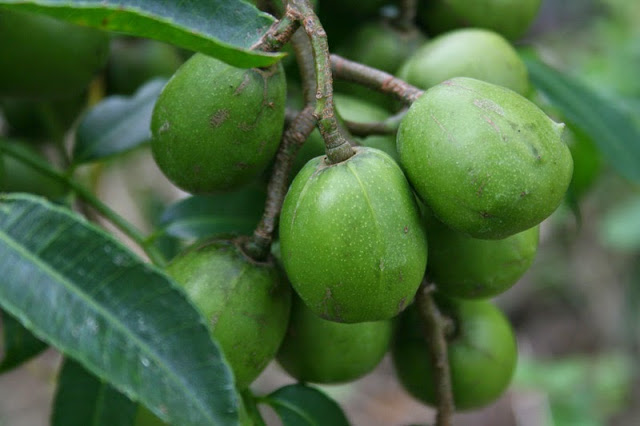
June plum trees are beautiful:

This particular specimen is growing at ECHO in Fort Myers. Spondias dulcis is a torpical fruit tree related to the mango and has a wide variety of common names including “ambarella,” “golden apple” and “June plum.”
Whatever you call it, they’re a really neat fruit tree for frost-free areas and they have multiple food uses.
The June Plum is a Multipurpose Tree
According to Purdue University:
“The ambarella has suffered by comparison with the mango and by repetition in literature of its inferior quality. However, taken at the proper stage, while still firm, it is relished by many out-of-hand, and it yields a delicious juice for cold beverages. If the crisp sliced flesh is stewed with a little water and sugar and then strained through a wire sieve, it makes a most acceptable product, much like traditional applesauce but with a richer flavor. With the addition of cinnamon or any other spices desired, this sauce can be slowly cooked down to a thick consistency to make a preserve very similar to apple butter. Unripe fruits can be made into jelly, pickles or relishes, or used for flavoring sauces, soups and stews.
Young ambarella leaves are appealingly acid and consumed raw in southeast Asia. In Indonesia, they are steamed and eaten as a vegetable with salted fish and rice, and also used as seasoning for various dishes. They are sometimes cooked with meat to tenderize it.”
Leaves and fruit – cool, eh?
I’ve eaten the leaves before when I was touring H.E.A.R.T. in the Lake Wales area, but I keep missing ripe fruit harvests. Now that I’m in a tropical climate instead of just visiting on occasion, I should get a chance to try the fruit soon.
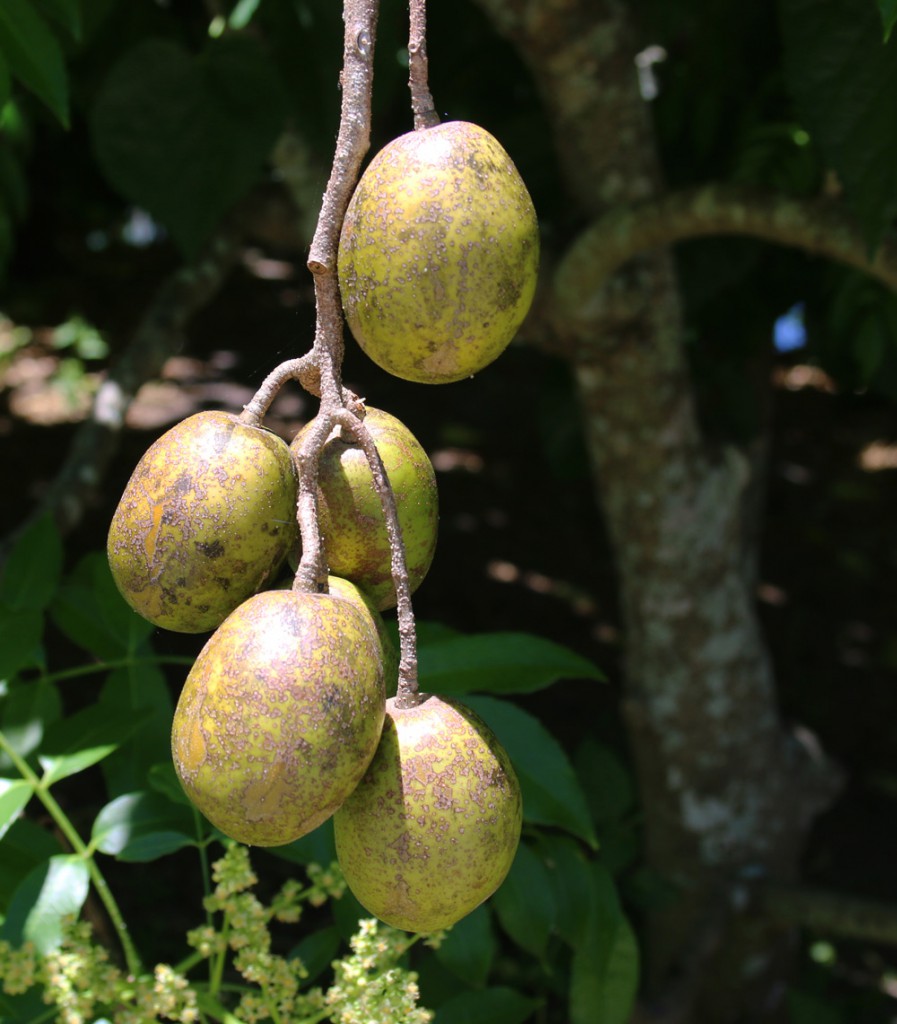
The closer you get to the equator, the more varieties of fruit you can grow. You go from perhaps 50-100 fruit tree species in temperate climates to over 1,000 at the equator.
I actually planted one of these trees in The Great South Florida Food Forest Project last year but it died from a strange bark injury – we never pinned down what damaged it.
Spondias dulcis definitely needs to make its way onto my next homestead. I love mangoes and we’re also going to enjoy this close relative.
As a final note for today: I’ll be posting pictures from ECHO for quite a while. Rachel and I did a lot of filming and photo taking. If you ever get a chance to visit, take it!

4 comments
Did you take a tour or were you able to visit on your own? We’ve done the free day tour but it was so busy we really didn’t get to spend time at any one part of ECHO. We’ve also purchased several plants and some seeds at a sale. Need to get back in June to see what’s growing. We’re about 45 min north.
Am looking forward to your photos from there as you always show something new.
ECHO is great! Definitely worth a look. The June plum sounds very interesting. The Crowley Plant Nursery in Sarasota has them from time to time. Many other great edible plants there too.
A friend from Jamaica said to peel them, salt and squeeze the juice in your mouth. He said it is the most refreshing drink. I am looking to plant one very soon. The larger yellow fruit is supposed to be better.
Craig
[…] of a highly nutritious and oily nut. And there’s, Yuplón, also known as Ambarella, this being Sponias dulcis, another sweet yellow fruit. And please let us not pass Earth element without mentioning our […]
Comments are closed.