Are you a new gardener?

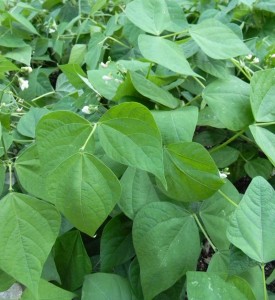
Close-up photos of healthy plants will keep people from seeing how rough the REST of your garden looks.
Are you an experienced gardener?
Then you will share the same experience: failure.
Over and over again, you will have failure. It happens.
Some years a late frost will destroy your salad garden. In other years, fire blight will attack your pear trees.
Sometimes weird things happen… and they happen to both expert gardeners and complete newbies. Gardening without guilt should be the goal of every homesteader. Sometimes things work out… and sometimes they don’t. But you keep going, no matter what.
Let’s Talk About Failure
Let me tell you about some of this year’s failures in my garden.
Right now, I have five mulberry trees. Two of the ones I planted seem to be unimproved varieties. I thought I was getting trees that would bear nice, big fruit… instead I’ve gotten pathetic little berries. I get plenty of them, sure – but they’re not what I thought they’d be. After two years of waiting… I’m disappointed.
Caveat emptor.
In my potato bed, I’ve now discovered that fire ants have taken a liking to my plants. I’ve got yellow and wilting potato leaves everywhere. I pulled a couple up the other day to see what was happening… and the root systems were full of fire ants. I’ve never read anything about fire ants wrecking root systems, but now I know they do. And once I googled the problem, I discovered that other gardeners have had the same problem.
Does that make me a failure?
At growing this year’s potatoes… yes.
But should I feel guilty?
Not at all.
Every failure is a chance for us to reassess our gardening methods, our pest control, our crop varieties and our own thinking. It’s good to fail now, before things get any uglier in our country. If you’re not actively growing and learning now, you might be in for a rocky road in the future.
What if I’d needed to feed my family on those potatoes because there was nothing left in the grocery stores? I’d be in big trouble. Yet because the fire ants decided to strike now, rather than in 2016, I’m able to reassess and take charge of their control for next year.
Let’s Talk About Crazy Schedules
Some years you’ll miss the best planting window for a specific crop.

There are things more wonderful than perfect gardens.
I brought a tour through my place a few weeks ago. It was ostensibly a food forest tour, but I also took the group through my annual beds.
This spring they looked rather pathetic. One long bed of salad greens going to seed, a couple of beds of patchy kale and cabbages, some sugar cane just coming up, a little block of mustard, a weedy herb bed… let’s just say it wasn’t the best showing for a professional garden writer.
Yet we still had a spring garden planted. The only thing most Americans planted this year was their fat butts in front of the television.
My wife and I had a new baby, I re-launched my edible plant nursery, I created an in-depth survival gardening audio course, drew a book on survival crops and seed-saving, built a mist house for propagation, plus ran a radio production business, all while teaching at various events across the state.
Yeah. The kale is patchy. But I planted some, and that was an accomplishment.
If you’re a business owner, a homeschooling stay-at-home mom, a homesteader or a 40-hour-a-week employee, you know it isn’t easy to pack in a spring garden. Yet you do it anyway. And if at some point you lose your job or the economy collapses, you’ll have the time to double-down on your gardening – and you will succeed, because you’ve honed your skills under less-than-ideal circumstances.
Let’s Talk About Keeping Things Perfect

No. Just no. Photo credit.
I know.
Ms. Perfect has an incredible, perfect tomato patch down the street.
And Mr. Amazing built his grape trellises so they’re aligned exactly with Polaris.
There’s nothing wrong with making things look good… but a lot of what “looks good” has nothing to do with productivity or functionality.
(CLICK HERE to keep reading over at The Prepper Project)

13 comments
You're only really a failure at gardening if you fail to garden at all. I look at gardening as a learning and sanctifying process. By the way, how did you know I aligned my grape trellises exactly with Polaris. :-)
I'm off to Prepper Project to read the rest of this excellent blog post……
Hehhehheh. You're an engineer. You can't help it. You are forgiven.
*cheering*
:)
I have this conversation with my wife often. One failure and she's ready to quit something. Me, just strengthens my resolve. As for the fire ants, have you tried diatemaceous earth (yeah, I know I misspelled it)?
Yes. Keep pushing along and she's likely to follow. Nothing better than a man that doesn't quit.
I used diatomaceous earth around the edges of my house last summer and it definitely lowered the population. The best I've found for control, sadly, is Amdro. Fortunately it's a lot less toxic than most poisons.
Hi David,
This was a timely post for me, as I was feeling very discouraged about my garden today. It's a lot of work with more failures than success sometimes…but I'm learning as I go, and I'm not giving up. You have lots of good info here for us Southern gardeners, so keep up the good work. And, congratulations on your new baby girl…a true blessing, indeed! ~ Ellan
Thank you very much. You can do it. The failures will drop off over time, though they never leave completely. I'm always learning.
I've had fire ants eat my potatoes, too… it happens. That's a bad surprise on two counts if there isn't an obvious mound when you go to dig them up. I haven't seen them in sweet potatoes–yet.
Thanks for this. I can relate, I have had lots of gardening failure since coming here from RI.
What a timely and perfect post
I get so bogged down in perfection and research sometimes. I forget some failure is part of success, and better now than later.
Thanks for the reminder to get working!
I had same issue with my potatoes. Tough to dig out the ants when they make their nest in the root system. I'm stumped on fixing this problem for future crops. Do you know of any other natural remedies or deterrents that can be used? Any help is appreciated.
From above: "I used diatomaceous earth around the edges of my house last summer and it definitely lowered the population. The best I've found for control, sadly, is Amdro. Fortunately it's a lot less toxic than most poisons."
Comments are closed.