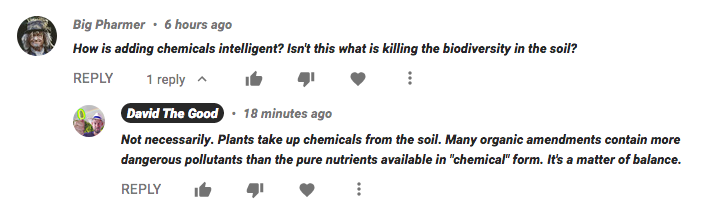
On my recent video where I mix up a batch of fertilizer with Steve Solomon, I had this interchange in the comments:
The dialog between what is “organic” and what is “chemical” is a busted conversation. Many of us come from a “chemical BAD/organic GOOD” background that doesn’t actually explain how the world works.
The Problem with “Organic”
Gardeners often add manure to their gardens to provide nitrogen and other nutrients, as it’s an “organic” amendment. This is seen as superior to just adding, say, diluted ammonia, which also contains nitrogen. Or urea fertilizer. Or MiracleGro, which has nitrogen along with a bunch of other nutrients.
If the manure source is from a non-medicated cow, on non-sprayed grass, not being fed imported hay or feed with pesticides and herbicides in it, then that manure could be considered a good source of nutrients with the additional benefit of providing organic matter, enzymes and microorganisms.
Yet if that manure is contaminated with heavy metals, aminopyralids, de-wormers, etc., then you’re probably better off with bagged fertilizer or some lab-engineered nitrogen source.
DynaGro is a popular soluble fertilizer that contains all the elements (that we know of) which plants need to thrive. They address the organic vs. chemical argument on their FAQ page:
“In chemistry, organic means a molecule that contains carbon. Accordingly, gasoline, motor oil, paper, etc. are “organic.” Plants do not take up any organic molecules. They must be broken down into their constituent ions, none of which are organic! In soils, these organic molecules are broken down by the action of a wide range of microbes including bacteria and mycorrhizae. However, many, if not most, certified organic fertilizers contain significant amounts of heavy metals including arsenic, lead, mercury, selenium, and others which can be dangerous to any animal consuming plants grown with those “organic” fertilizers. To avoid issues with heavy metals, Dyna-Gro uses only highly refined, technical grade raw materials in the production of all of our plant nutrition products. While this ensures high quality, nutritionally healthy crop production, it prevents our nutrients from being considered “organic”.
Organic certification is based upon the source of the raw materials, not upon the absence of heavy metals or other contaminants. A check of the analyses of registered fertilizers will reveal that some “certified organic” fertilizers contain levels of arsenic, for example, that would be illegal in drinking water! The one sensible part of the “organic” movement is minimizing or eliminating the use of chemical pesticides. Providing your plants with proper levels of Pro-TeKt, The Silicon Solution, can eliminate the need for pesticides. Dyna-Gro does not encourage the use of any chemical pesticides.”
That is about how I feel as well. After getting DESTROYED by a nice, organic amendment, my thinking on the topic started to shift. Now, as I’ve seen more and more people get hit…
…well, let’s just say I trust refined “chemicals” more than I trust potentially contaminated “organic” amendments.
And are these “organic” amendments even “organic?”
Not in the way we think of “organic.” Organic makes us think of stuff that isn’t contaminated with toxic poisons. Animals grazing on good land. Pastures fed by lightning and snowmelt.
This isn’t the way things are supposed to be, but we work with the hand with are dealt.
You may say, “but wait – isn’t it just manure that is the problem?”
I wish.
The problem is what is happening downstream to the supply line, to products such as mushroom compost – which has traditionally been a good garden amendment.
Shaun H. writes:
“So take a peek at the attached photos of some of my pepper plants, with strange leaf growth and curling. I wondered if it was possibly Grazon induced? I didn’t ever put manure or hay/straw on my garden, but I did apply mushroom compost, which appeared to me to have some manure in it! So now I’m wondering if mushroom compost is another no-no since it often has manure as a component?”
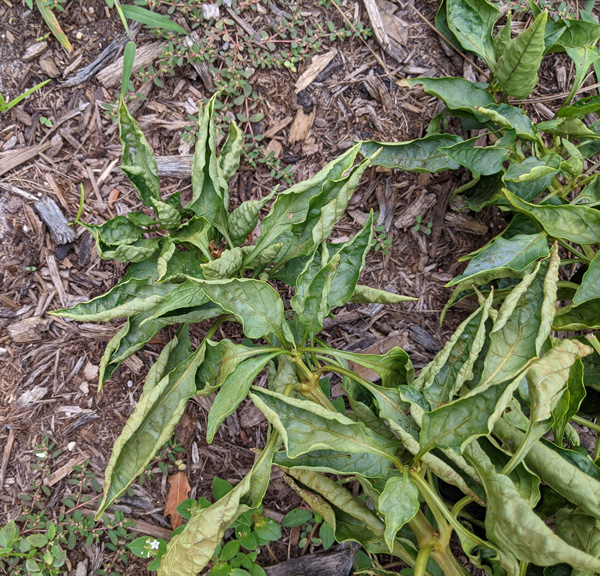
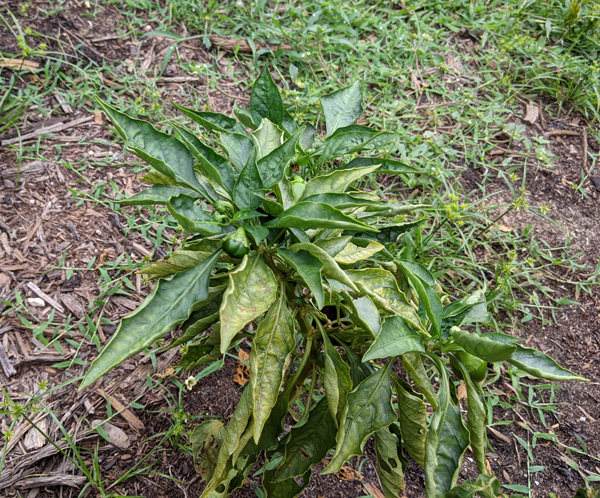
I have heard reports of contaminated hay, mushroom compost, potting soil and purchased municipal compost.
But wait – there’s more!
Remember the arsenic in chicken feed thing?
“Turns out that when you feed arsenical drugs to livestock, the arsenic doesn’t just magically disappear. Instead, trace amounts of arsenic fed to chicken are excreted in their manure — and when hundreds of thousands of chickens are raised on a factory farm year after year, the arsenic can accumulate pretty quickly, eventually contaminating soil, groundwater and surface waters.”
Instead of clean, “organic” materials, we are getting toxic junk. It seems like there’s junk in everything. Heck, even seaweed is picking up toxic runoff in the ocean and absorbing it.
1. Pesticide run-off into the oceans has caused arsenic and
heavy metal contamination. Lead and mercury has been found
by scientists who study marine botany.
2. Fertilizer run-off into the oceans has caused petroleum-
fueled, oversized seaweed.
3. Oil-spill dispersant contamination from the gulf oil spill has
spread.
4. Radiation contamination continues– seaweed sucks up
radiation like a sponge. Fukushima nuclear reactor showed us
this.
5. Fresh water seaweeds such as spirulina absorb
contamination which deposited from soil contamination run-off
and radioactive fall out.
So forgive me if I step over to the “chemical” side of things now and again. The most dangerous thing I’m putting in my garden right now is probably the cottonseed meal – and it’s the most “organic” amendment!
My current thinking is to first mineralize the soil with various amendments, then grow cover crops and recycle them into soil life and organic material. In a food forest system, chop and drop is highly effective for this. Yet in this soil, I would still give the system lots of good micronutrients at the onset, as well as adjust the pH. Then nature can take over from there.
The soil life is important. In the short term, we are shooting for highly nutrient-dense food. As the plants get what they need and thrive, we will build up organic matter levels and feed the microbiology as well.
I wrote Compost Everything for a reason. I hate the toxic mess the world has become. The supply line of organic amendments being screwed up inspired me to seek out alternative ways to make enough compost to feed the garden. I am still composting and will compost a lot more as my gardens grow.
One piece at a time, one foot in front of the other…
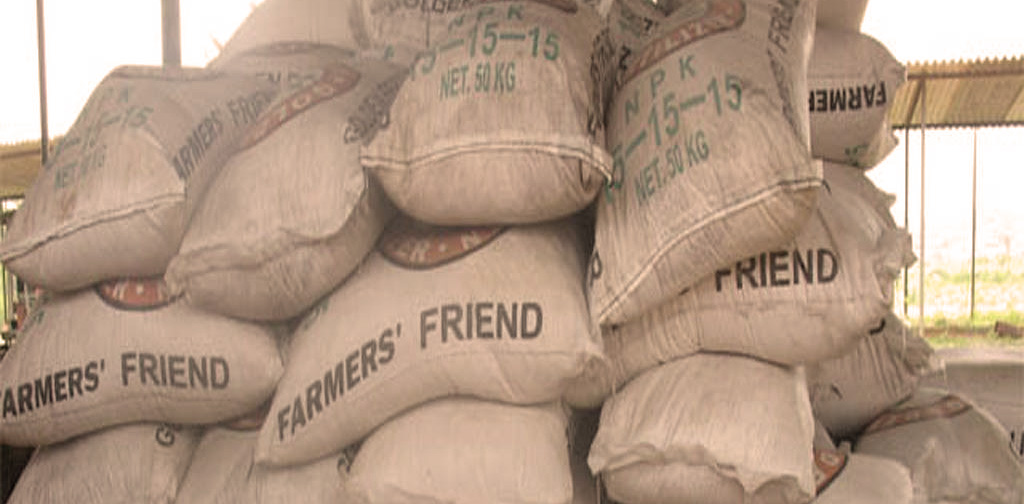
*Image at top: “Fertilizer, NPK 15-15-15 in stack” by IITA Image Library is licensed under CC BY-NC 2.0

9 comments
This is a really interesting topic and you post is super informative. I’m an new gardener and have recently started my first compost pile. Do I need to worry about grass clippings that have been treated with weed n feed contaminating my compost? How long does that stuff stick around in the grass and soil?
I would avoid grass clippings that have been given weed-and-feed. If you harvest from your own lawn and don’t treat it, then you’ll be fine.
According to this article:
“Scotts Weed and Feed uses a combination of 2,4-dichlorophenoxyacetic acid (2,4-D) and 2-(2-Methyl-4-chlorophenoxy)propionic acid (mecoprop) for weed control. While 2,4-D breaks down relatively quickly, having a half-life of seven to 10 days, the slower-acting mecoprop may remain active for two months or more and is water soluble, making it a groundwater contamination risk, according to the Extension Toxicology Network. Grasses metabolize these herbicides. Broadleaved weeds, however, suffer the full effects. Your ornamental plants may have roots extending under the lawn, absorbing herbicides that percolate through the lawn and into the underlying soil. If you have ornamental plants surrounding your lawn, use a spot weed treatment instead of applying herbicides over the entire lawn.”
This is excellent info. Thank you!
Good info as always David. I look forward to your next live stream.
Thank you. I am working on our internet issues. Maybe later this week. Getting a new router tomorrow.
I’m having this same debate with myself now. Have avoided all lawn chemicals and fertilizers for last 4-5 years. Back to Eden garden grew ok year 1, year 2 small animals hit it pretty hard, got a bit of veggies. 3rd year this year started great, gave up an rototilled since have hardpan clay with couple inches of top spoil. 3ft fence kept out the small animals, but deer got everything but a salad and couple of squash. Will raise up the fencing, have electric charger and need to build a gate. Tempted to buy local compost to help build up soil. Michigan 5B, winter sown seeds the seedling start off well. Probably should be the bagger on the lawn mower to collect the last of the lawn clippings and wait for the leaves to fall, they sometimes wait till the first snow and then I’m sunk.
It is incredibly frustrating. Having gone from the best garden EVER, by FAR, to this dead sand here – I feel your pain. You have it harder though, due to a shorter season. For that clay, deep tilling in some gypsum should help.
tHANK YOU DAVID! YOu might of saved my sandbox from further damage. I bought a relative small packet of mushroom by product and no I m going to have to think twice about using it all…or using it somewhere it can hurt anything? I know I need to demineralize the sand box but i have no idea where to start. I bought all this green manure that I will do but still I need to add something. I cant really do a soil test right now. God Bless you
Comments are closed.