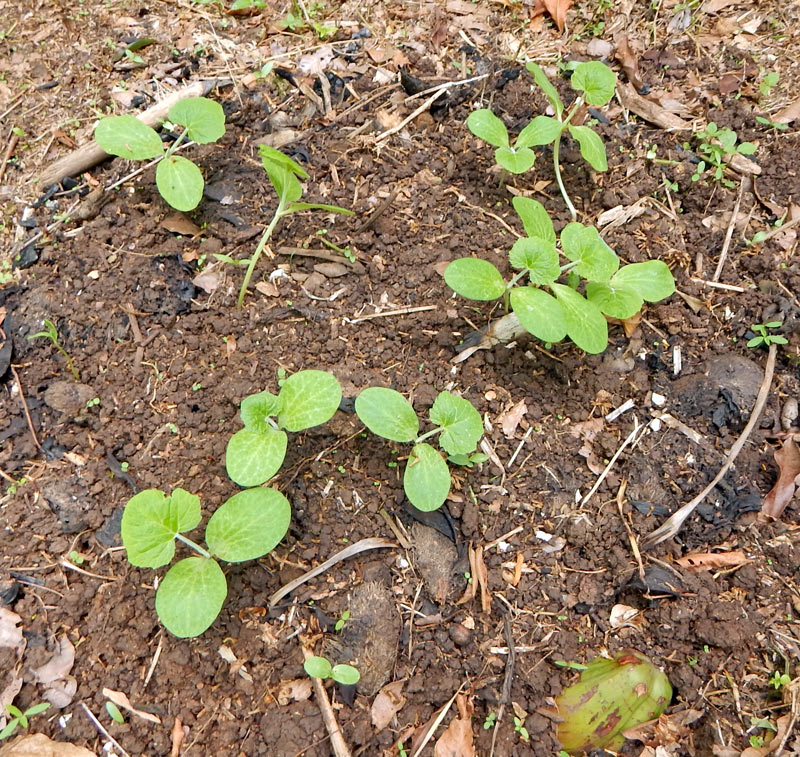
I have been experimenting with pumpkin hills. Since I believe the soil here is acid, though I can’t prove that via a pH test yet, I am starting my melon and pumpkin hills by starting a fire first. Then I fork in some half-finished compost and water with compost tea. The first experimental pumpkin hill looks like this now:
You can see me do this in this recent video:
A native farmer told me that he always burns a brush pile and then plants watermelons. The Seminole pumpkins I planted when I got here on melon pits containing fresh cow manure did terribly. As they moved away from their source of fertility, the vines got scrawnier and scrawnier and only one of them actually produced a pumpkin. A tiny, tiny pumpkin.
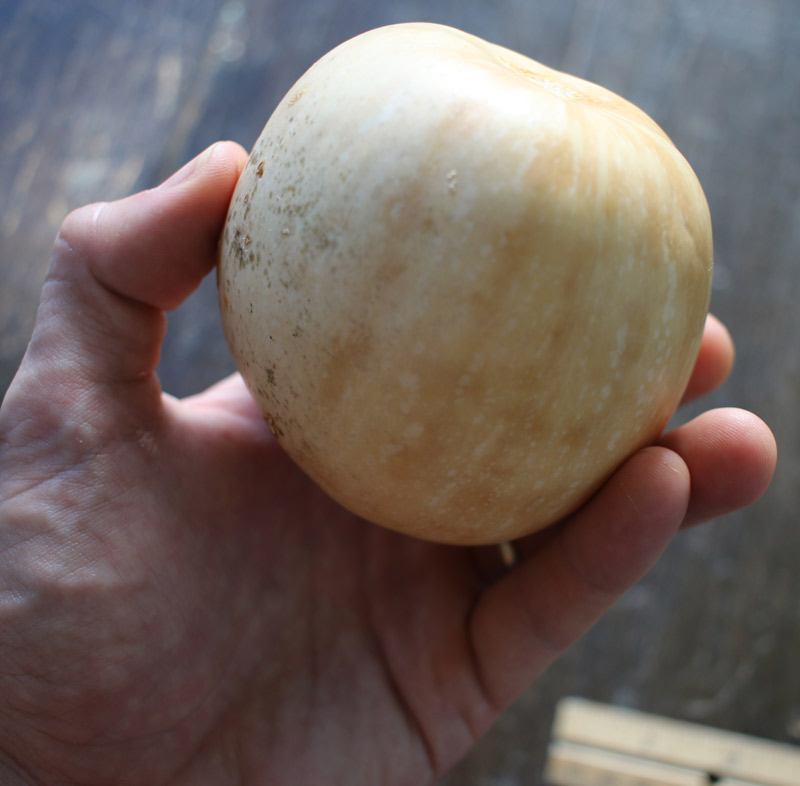
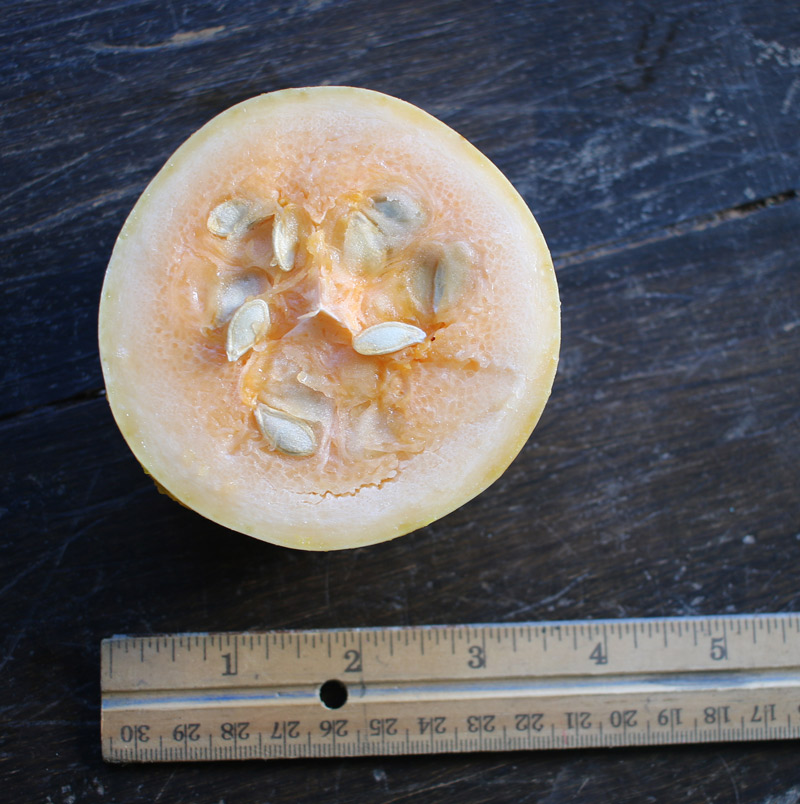 Pathetic!
These were Seminole pumpkins from ECHO and might have been from a less vigorous genetic line, but I believe the real problem was soil nutrition, the thick clay, the rapid growth of weeds around the original pits, and acid soil.
I visited a local farm and saw big tropical pumpkins growing in big rambling masses of green down the sides of the hill.
Here are some curing:
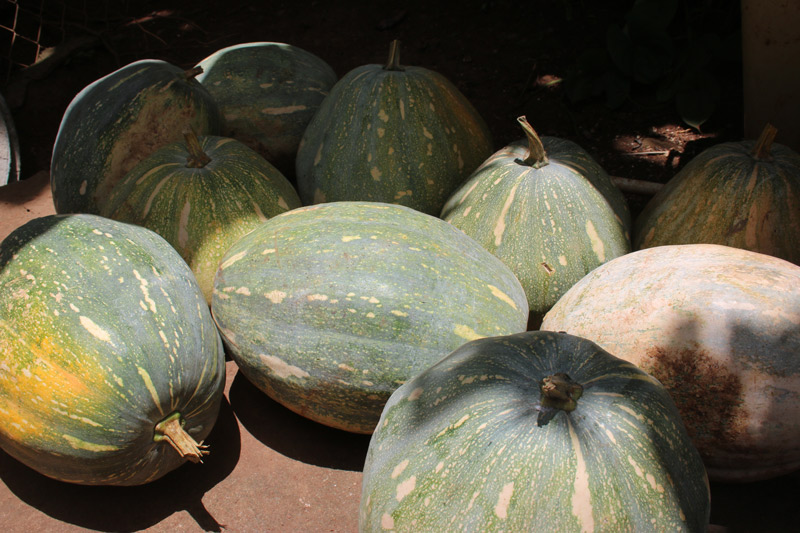
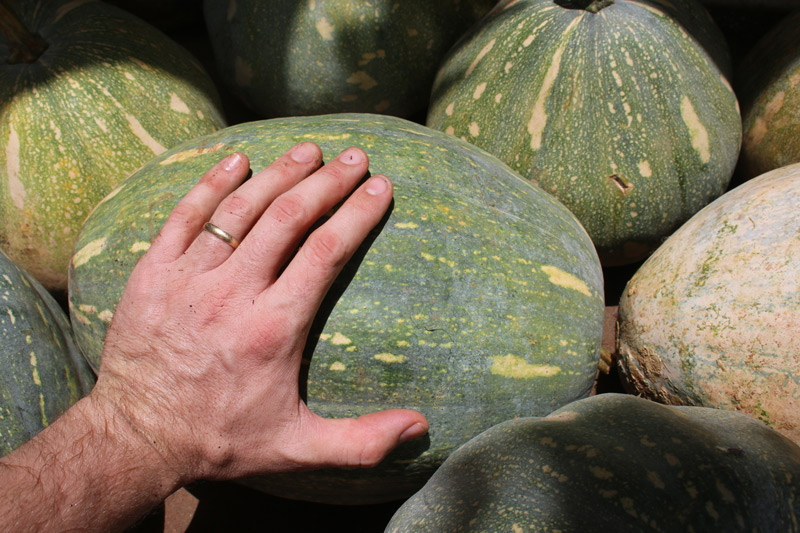
They may be better adjusted to the climate or there’s something about growing pumpkins here I don’t know yet. My new method is to take some breadfruit leaves or banana leaves pile little sticks on top of it, light it, then douse the fire with compost tea. I also work in some rough compost from my compost bed in the main gardens.
The pumpkins I planted in the video are already coming up and they look very nice.
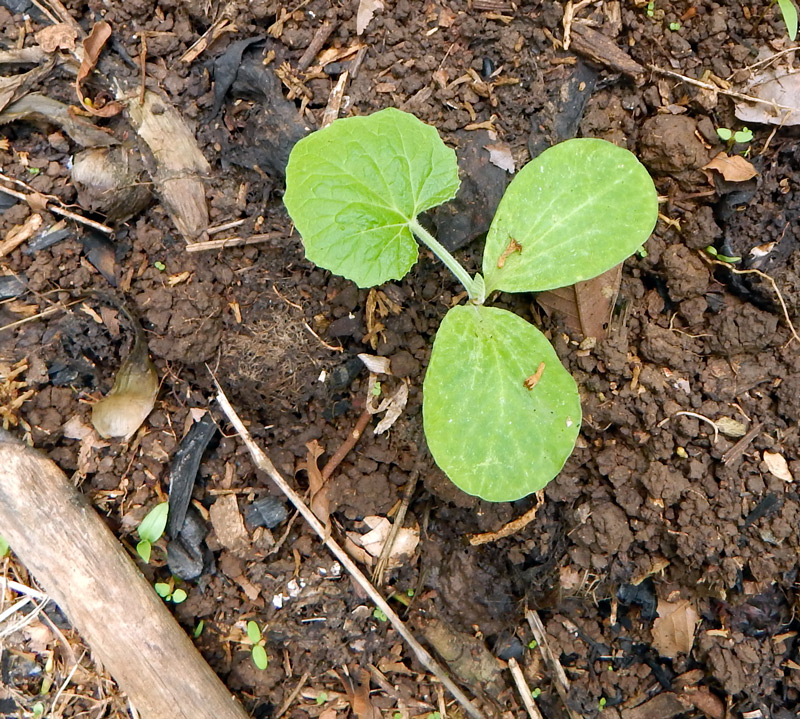
I am hoping for my own pumpkin covered mountainside.
Growing pumpkins is a passion. I don’t even like the way they taste very much, except for the very good Seminole pumpkins I grew back in North Florida. It’s just… they’re awesome to grow. The fruits can be massive. The vines are terrifying in their growth rate. The blooms are beautiful. And the grand variety of sizes, colors, and shapes that can be found in pumpkin cultivars is breathtaking.
For those of you who have grown pumpkins in Florida or in other tropical climates, does anyone know if there is a good C. maxima type that will take the heat and humidity?
My best luck has been with members of the C. agyrosperma and C. moschata groups… but there are some beautiful pumpkins in the C. maxima clan. Back in Tennessee I grew Golden Hubbard winter squash which were a lot of fun. That was the variety I first planted on my original melon pits which ended up earning their place in Compost Everything… and which I show off in ridiculous fun in Compost Everything: The Movie.
I like the great, big, beautiful slate blue original Hubbard squash but they are hard to find seeds for anymore… thank goodness for Baker Creek.
I found a nice fat butternut squash in a local grocery and have saved seeds from that.
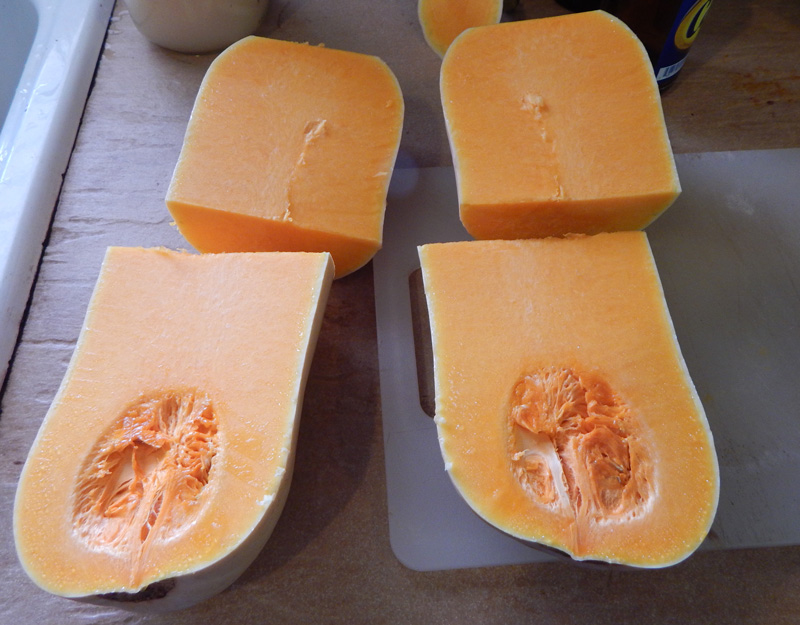
I also saved the seeds from the tiny Seminole pumpkin and my wife and children are actually planting them down the hill as I type.
Why, you may ask? Why am I not down the hill planting pumpkins?
Well, I sustained a rather severe injury to my hand and it’s currently immobilized in a cast. Rachel isn’t letting me do anything right now and she is the nurse. You’ll see what I did in a video later this week and I’m going to have Rachel reenact the injury as me.
It’s going to be hilarious.
When life gives you injuries, make YouTube videos.
In case you wanted to know, yes, it was machete related.
Pro tip: you won’t finish your yard-long bean trellis if you sever a couple of tendons in the middle of the job.
Back to pumpkins.
As survival foods go, winter squash and pumpkins are a must have. Varieties such as the Seminole pumpkin are particularly valuable since they store for a long period of time.
Many of the tropical pumpkins I’ve tasted, such as calabazas, do not have excellent flavor and tend to have stringy flesh. I have been collecting local varieties from the market and from farmers and hope to rectify this through selecting pumpkins with superior flavor and texture. We shall see.
Getting them planted properly to begin with on a fertile hill of compost and ashes seems to be key, though I have just started and am still learning from the natives.
If I can just stop injuring myself and recover, I’m going to transform this mountainside.

17 comments
Tendons cutting is the most terrifying thing to me about sharp tools. Best wishes for full and speedy recovery. I met an old woman in North Carolina once who said that growing up her family made pumpkin syrup by cooking down liquid from boiled squash. Ever since I always think we are just growing the wrong pumkins, but I’ve never been able to find one that is really sweet or any good to eat outside of a pie. I’m fascinated by growing a giant pumpkin just to do it once. Always have been. Almost everything here will grow better with an application of wood ash.
Thank you, Steven. Carol Deppe probably has some good varieties for your climate. I think growing a giant pumpkin would be awesome. I haven’t done much with wood ashes before so I’m looking forward to see how they do. Coming from a climate where wood fires were rarely necessary, at least for heating, I would always have to burn my own fires to get ashes. Most of the time, I just made biochar.
By all accounts biochar permanently raises soil ph, so I’d go with that. Ashes are definitely transient in effect. I met a giant pumpkin grower last month and mostly he was saying how much work it is with constant watering and fertigating.
Steven Edholm
SkillCult: skillcult.com YouTube: https://www.youtube.com/c/SkillCult
Yeah, I’ll bet. That’s a LOT of work for the plant to make. Biochar is on the agenda.
Sorry about your injury.
Will pumpkins and squash be added to the Survival Plant Profiles page as a must have?
Thank you. Yes, I should add them. A grievous oversight on my part.
I am so sorry to hear about your accident!! I will be praying for you! (And Rachel!)
Thank you! Rachel is going to reenact the injury for YouTube. It will be great.
As I was reading, I was wondering if it was a machete accident. Thanks for breaking the suspense. Although, I’m sure you could have done without breaking the skin. I injured the muscles down the back of my bicep recently , which made it impossible to lift anything without writhing in agony. I never felt so powerless in my life, than to lose my right arm!
When our daughter was about 5 too, she came inside with her dad, sporting a hatchet injury on her foot. I wanted to pass out, at the same time, I had to stay calm to administer medical assistance. I bet you know what I’m talking about there. That creeping sickness in your gut, as you realise, this shouldn’t be what your appendages look, or smell like! My sympathies.
My favourite pumpkin to grow in our really hot and humid conditions, is something called a JAP (Just A Pumpkin) or otherwise known as a Kent Pumpkin. It’s got a soft skin, so easy to cut, but also stores surprisingly well if undamaged. It’s sweet and not too watery when cooked. So it keeps its pumpkin flavour. It’s the only one I’ve succeeded at growing in our conditions, which includes clay soils. Although, I don’t know if you can get this variety where you are located.
I hadn’t heard of the Kent pumpkin before. This one?
http://www.mrfothergills.com.au/vegetables-herbs/vegetable-seeds/pumpkin-seeds/pumpkin-jap-or-kent.html
Having only one useful arm has made me grateful I even have that.
Yep, that’s the one! A beautiful, all rounder. If you could only grow one variety of pumpkin, this would be the one. I’ve found other pumpkins, to be too thick skinned, with dry flesh – or too thin skinned, with watery flesh. This one sits right in the middle, and is much easier to grow than other varieties I’ve tried.
Oops, me again, I just did some research and came across your post titled The Seminole Pumpkin Project.
I noticed a few of the pumpkins, took the shape and internal texture of the Kent Pumpkin I referred to. In particular #19: Gene Smith from Greenville, SC made the comment about the ability to beat powdery mildew. Which is something we get a lot of in our hot, Queensland (Australia) summers. This variety of pumpkin (Kent) doesn’t seem to be phased by it much, and is an extremely vigorous vine, as Gene also notes with his Seminole X pumpkins.
I wondered if the Kent could have been a cross between the Butternut and Seminole pumpkin, as Gene speculates in his comments also? The Kent, has a slight butternut flavour and texture, but with a more dense pumpkin flavour too – reminiscent of a wild pumpkin. I enjoyed reading your Seminole Pumpkin project, and how everyone got something a little different.
Maybe you could breed your own local pumpkin, with all the traits you like, minus all the traits you don’t. Then export those seeds to the Florida market. ;)
Looks like your pumpkins (and other crops) may have something else to worry about down there in Florida:
https://www.yahoo.com/news/pesticide-resistant-whitefly-could-devastate-many-us-crops-095525571.html
Great, another pest for Florida.
[…] I visited a local farm to check out the pumpkins growing there, I was also fascinated to see an intercropped system of […]
Hi SG family! We have been experimenting the last few years with Seminoles and find that starting them at the base of a tree, rather then in the open, made the most vigorous, productive vines. They love big, honkin’ piles mulch, too. When the temps reach over 100 degrees, our Seminoles seemed to grow in rebellion to the heat! We grow them quite large, 12″ to 18″ across. Heal soon. PRO TIP: machetes and Cassava leaves don’t mix!
Very cool – thank you for the advice.
Comments are closed.