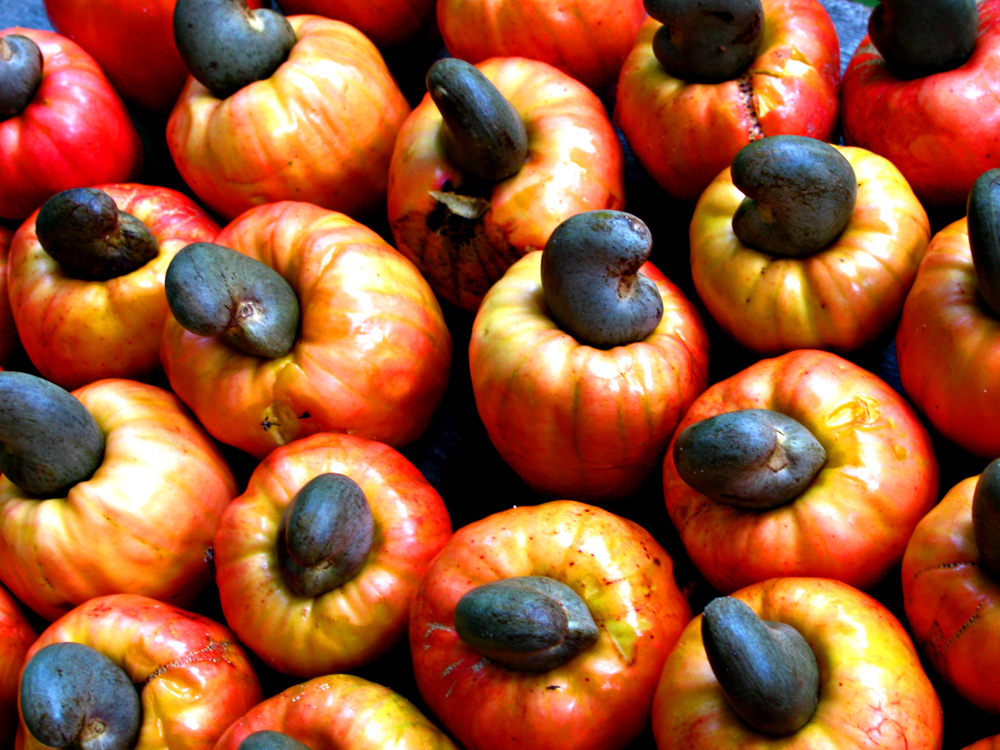
Germinating cashew nuts is easy, provided you have fresh, raw cashew seeds at the onset.
As there is a cashew tree on our new property, plus multiple trees on our street, getting fresh cashews for germination was just a matter of picking them up from the ground.
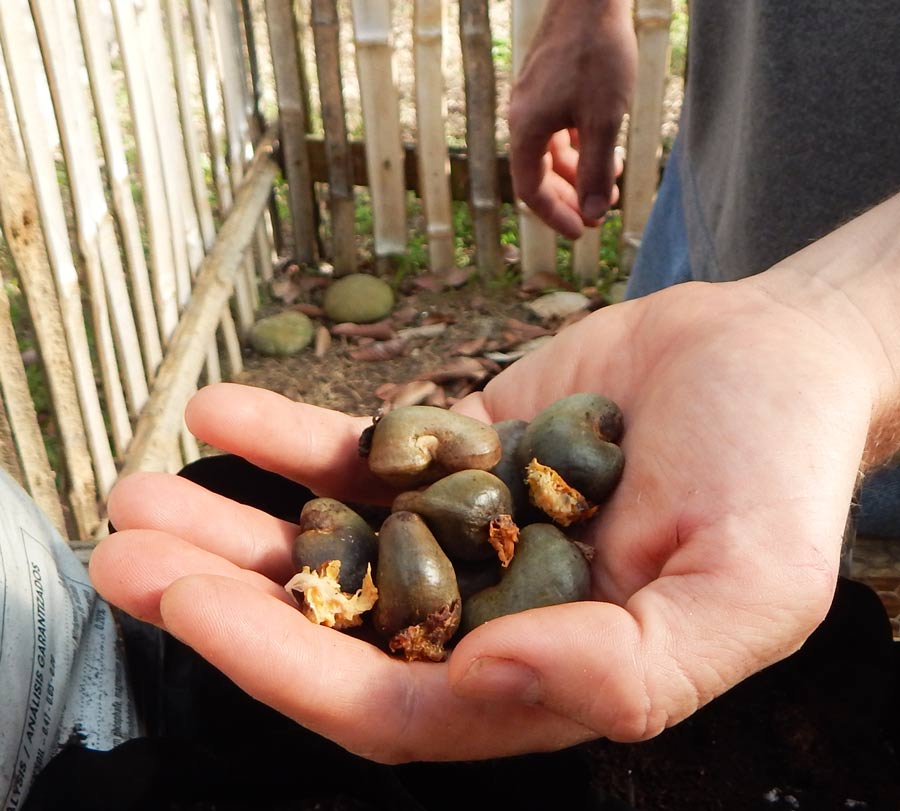
Cashews aren’t really a nut at all; in fact, they’re a seed that grows on a strange fruit that isn’t really a fruit.
I’ve posted before on growing cashews and share in that post about the difficulty involved in processing the nuts.
The fruit can be used for juices, though, and the tree really is cool-looking.
I planted the cashew nuts in the first picture into grow bags of potting soil about two and a half weeks ago. Here’s what they look like now:
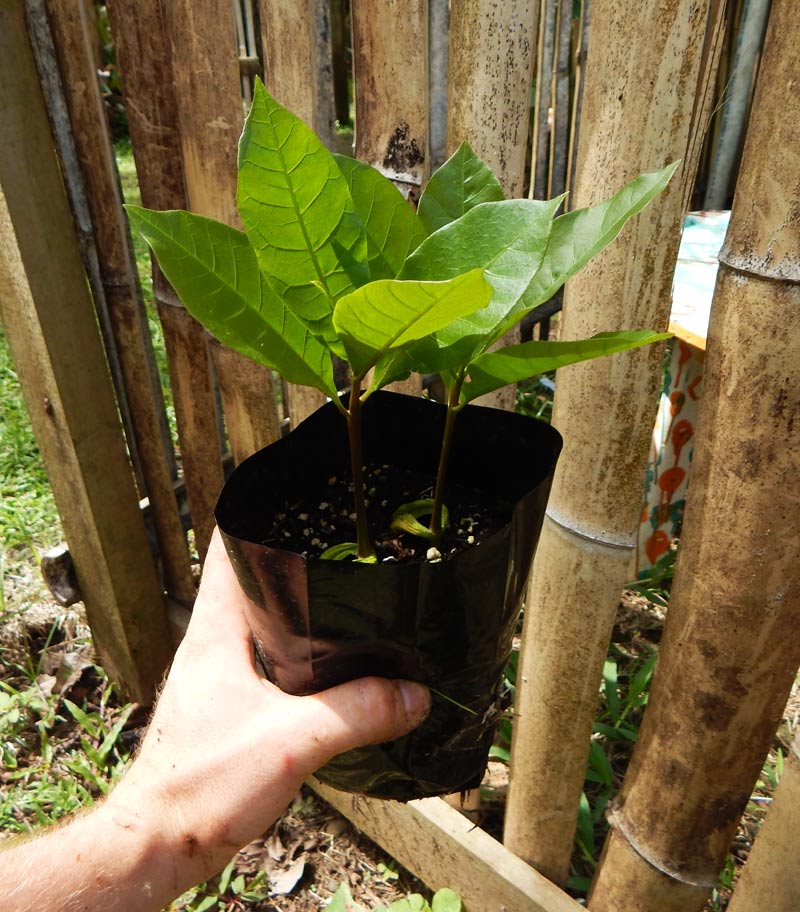
Fast!
I’d say almost all, if not all, of the seeds germinated. When I start my new food forest, I’ll be adding cashew trees to it. I’d like to pot these trees up but it’s hard to find pots or large containers here to plant them in, so they may just end up in the ground somewhere.
Germinating Cashew Nuts: How To Do It
First, don’t buy a bag of cashews and plant them. That would be an expensive waste of tasty nuts!
The cashew nuts you plant need to be raw, unshelled and fresh.
Getting viable seeds in the USA is hard. You can’t just buy a bag of “raw cashews” to plant… they’re dead as doornails. Probably deader. According to The World Agroforestry Centre:
“Seed storage behaviour is orthodox; 100% germination has been recorded after 4 months of open storage at room temperature, but viability is reduced to 50% after 10 months and none survives after 13-14 months.”
A couple of years ago a Asian friend/fan snuck in a fresh cashew from the tropics inside her bag of dirty clothing and gave it to me at the 326 Community Market.
“Put seeds inside your dirty underwear!” she said, “They never check!”
I have really hardcore fans.
Unfortunately, that seed failed to germinate (it probably died of embarrassment) so I was stuck cashew-less until I bought a tree for my parents’ home the next year.
If you’re able to find fresh cashew seeds, plant them right away a couple of inches deep during warm weather. Mine got plenty of warmth and sunlight and the temperatures here are always in the upper 70s to mid 80s – perfect for seed germination.
Cashews are actually quite good at reproducing under the right conditions and have even been reported to be invasive in some regions, such as Queensland Australia:
“Cashew nut (Anacardium occidentale) is an emerging environmental weed in the Northern Territory and northern Queensland, and is regarded as a potential environmental weed or “sleeper weed” in other parts of northern Australia. It is cultivated in tropical regions for its edible fruit, but has been spread by fruit bats and other animals into natural vegetaiton. While it currently has a relatively limited distribution and impact, this species is thought to have the potential to become a serious weed in the monsoon regions of Australia.
Cashew nut (Anacardium occidentale ) was first recorded as naturalised in the Northern Territory in 1988, though it is thought to have been present for some time prior to this. It grows on the edges of monsoon forests near Darwin and is regarded as a problem weed in the Tiwi-Cobourg bioregion, being particularly widespread on Melville Island.
In Queensland, cashew nut (Anacardium occidentale) is a weed on the Cape York Peninsula and is becoming invasive on Horn Island in the Torres Strait. It is also listed as an undesirable plant in Townsville City and Thuringowa City because of its current or potential adverse impact on natural vegetation in the Townsville region.
There are also unconfirmed reports that cashew nut (Anacardium occidentale) is naturalised in the coastal areas of Western Australia north of Broome, and that it is common around settlements in the Kimberley region.”
This isn’t really a risk for home gardeners, however. It’s not like kudzu. You’d have to walk away from a cashew tree for a couple of decades… and then you might come back to a small stand of them. They’re not going to be eating the interstate any time soon.
When I get some good cashew fruit, I’ll see if I can talk Rachel into making juice or some crazy recipe with them so I can film it for you all. One of these days I might even try “burning” some cashews to make them safe for eating. Of course, if I do that wrong I might die, so I might have a native do some for me first.
Until then, I’m quite pleased with my little seedlings.