
Growing moringa is easy and worthwhile
Moringa has been called the “Miracle Tree,” and for good reason.

Growing moringa in my garden – this is a young seedling
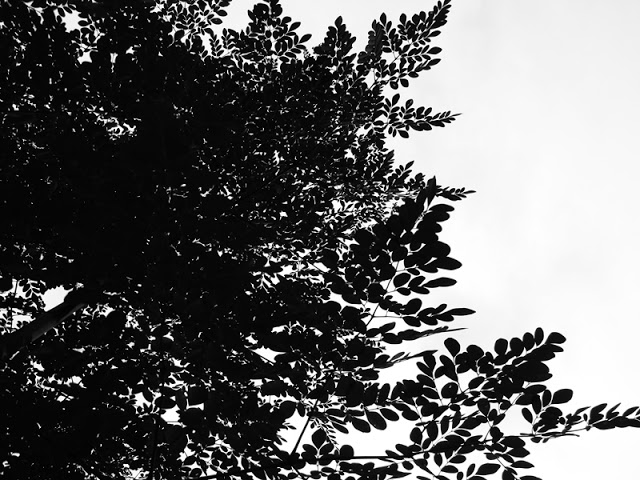
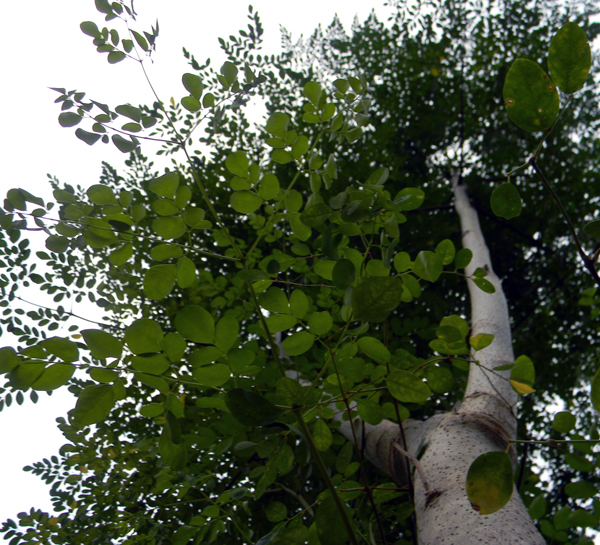
But tall trees aren’t really what you want. You want trees that are easy to harvest. To get that, simply cut the trunks at about 4′ and let them shoot up lots of tender new growth. The compound leaf stems are easy to break off so the tiny leaflets can be dropped into soups, sprinkled into salads or dried/frozen for future use. After learning of its incredible nutrient profile, I’ve started putting the leaves into everything from smoothies to scrambled eggs. Bonus: they taste good.
The trouble with this tree, however, is that it’s a tropical all the way. It quits growing when the weather gets cool – and freezes to the ground during a frost. That means those of us in the central to northern part of the state won’t get 60′ trees that collapse onto our roofs during thunderstorms. Fortunately, the Moringa is hard to kill and in spring will generally come back from its roots.
Growing Moringa Where it Freezes
(Click here for more on moringas and frost protection!)
SPUDOMETR RATING:
4 1/2 Spuds
Name: Moringa Tree, Miracle Tree, Drumstick tree, Horseradish tree
Latin Name: Moringa Oleifera
Type: Tree
Nitrogen Fixer: No (updated 10/31)
Medicinal: Yes
Cold-hardy: No
Exposure: Full sun/part shade
Part Used: Leaves, pods, roots
Propagation: Seed, cuttings
Taste: Good
Method of preparation: Raw, cooked, dried, sauteed. Leaves and pods.
Storability: Leaves can be dried/frozen, pods could likely be pickled
Ease of growing: Easy to hard, depending on growing zone
Nutrition: Unbeatable
Recognizability: Low
Availability: Low