

Some years ago, we planted some cherry trees in N/C Florida to see how they would do. The varieties that lived were Minnie Royal and Royal Lee, both low-chill selections distributed through Dave Wilson nurseries.
They were fine for a couple of years, then we moved. When we visited a few years later, they were gone and the current homeowner didn’t know what had become of them.
We also planted a Cherry of the Rio Grande (which is not a true cherry) at that property but have no idea if it lived. We also planted a Jamaican cherry there but it perished at the first hint of frost, despite being covered with a sheet with a barrel of water next to it. That’s a GREAT tree in the tropics, but not outside of it. The featured image in this post is a Jamaican cherry. We have one in the Great South Florida Food Forest and children love it.
Surinam cherry did better in North Florida, surviving and fruiting alongside the house. Though I wouldn’t trust it out in the open.
Here in Lower Alabama, north of Pensacola, we have a climate that is not amenable to true cherries. I planted four varieties last year that are currently living, though the stinkin’ deer chewed them up last summer.
I also planted three Nanking cherries, all of which lived. This spring, they flowered for the first time:
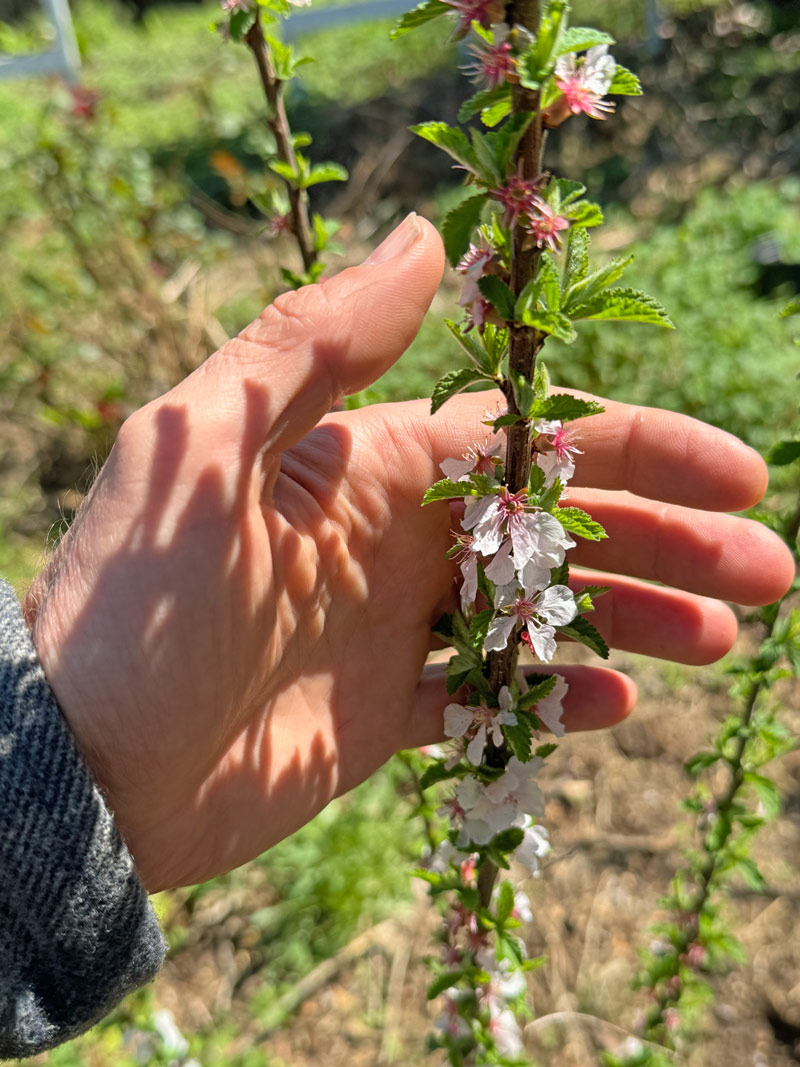
And not only that, they are setting fruit!
Nanking cherries are sometimes referred to as Manchu cherry, downy cherry, mountain cherry, Mongolian cherry, or Chinese bush cherry, but are not to be confused with the very similar Meader Bush cherries (Prunus japonica x Prunus jacquemontii).
Due to their region of origin, Nanking cherry are particularly well adapted to nearly every climate and condition, including extreme cold, extreme heat, arid conditions, high elevation, and nearly all soil types. They are well adapted to the Intermountain West’s climate and conditions, and can produce fruits even if flowers are exposed to late spring frosts.
We grew them in Tennessee, but didn’t have much hope for them here because of how much warmer it is; however, we have been pleasantly surprised!
It’s not a cherry tree – it’s more of a cherry bush. But any cherry is welcome!
The Surinam cherry freezes to the ground here, and we’re also probably too cold for the Cherry of the Rio Grande, unless we planted a few along a south-facing wall.
Sometimes you’ll see Barbados cherry (Acerola) sold locally as a “Florida cherry” in big box stores.
Don’t fall for it. That cherry-like plant is a PURE TROPICAL. It dies below 32 degrees.
Sure, it’s a “Florida cherry” if you live in Miami, but in most of the state it’s gonna die, and it’s TERRIBLE that it’s being marketed as a cherry for this area. Don’t fall for it. It’s a great fruit, but it’s a tropical fruit. If you want to grow one outside of zone 10, you’ll need to grow it in a pot and bring it inside during freezes, or just keep it in a greenhouse.
Just a recap: THIS TREE IS GREAT IN SOUTH FLORIDA
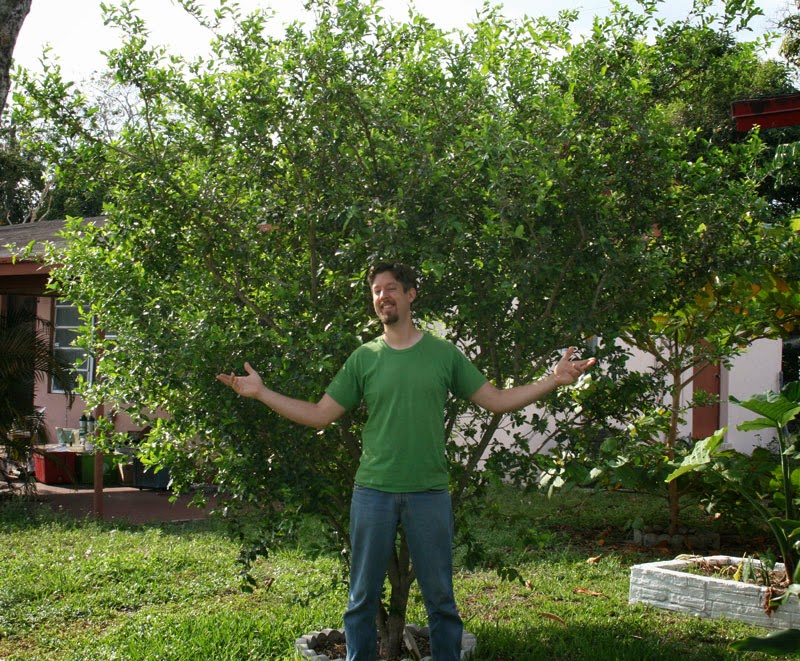
BUT NOT IN NORTH FLORIDA OR ALABAMA
They will die die die and dying die the death.
The goumi berry is another cherry-like fruit and it does quite well here.
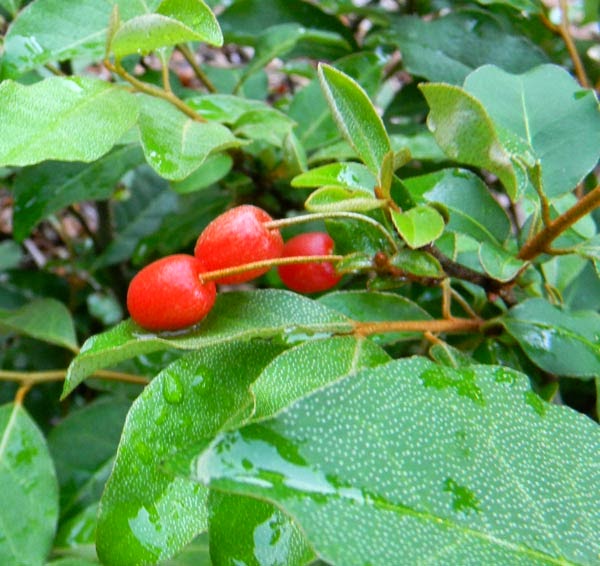
We have one in our yard. It’s supposed to need a pollinator but has been setting fruit all by itself. They are a little bit astringent, but not terribly so. I hope to add more varieties, and I’m also adding some improved autumn olives from One Green World. We planted some unimproved autumn olives and like those, so we’re really looking forward to adding even better cultivars.
That’s the update so far. I’m getting more Nanking cherries for my nursery and the food forest and will keep you posted on our other cherry and cherry-esque experiments.

1 comment
I’ve read that Nanking cherries also reproduce reliably true to parent by seed, however they can cross with other closely related prunus species. Have you tried the native flatwoods plumb(prunus umbellata) as a cherry substitute?
There are several prunus species that volunteer in the garden here in Eastern Iowa that are just crazy cold and heat hardy. The easiest one by far to cultivate from seed has been black cherry(prunus serotina) and American plumb. I’m itching to do some crosses however with Siberian apricot(prunus sibirica) to increase size and flavor.
Hope you have a bounty of cherries!