(For part one, click here.)

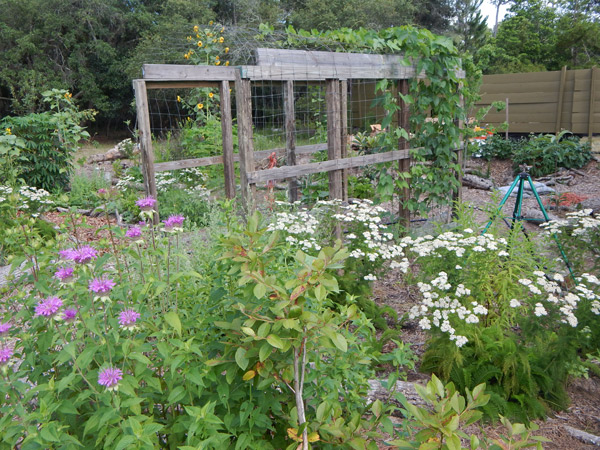
That’s what a permaculture garden should look like.
Of course, I say that as somebody with terminally rectangular beds in my backyard…

Do as I say, not as I do. Heh.
Beans are growing along the trellises Sam built in his permaculture garden, both traditional pole beans:

And velvet beans:

Another thing you’ll see in this garden is the use of plant “guilds;” for example, here’s a classic apple/comfrey guild:
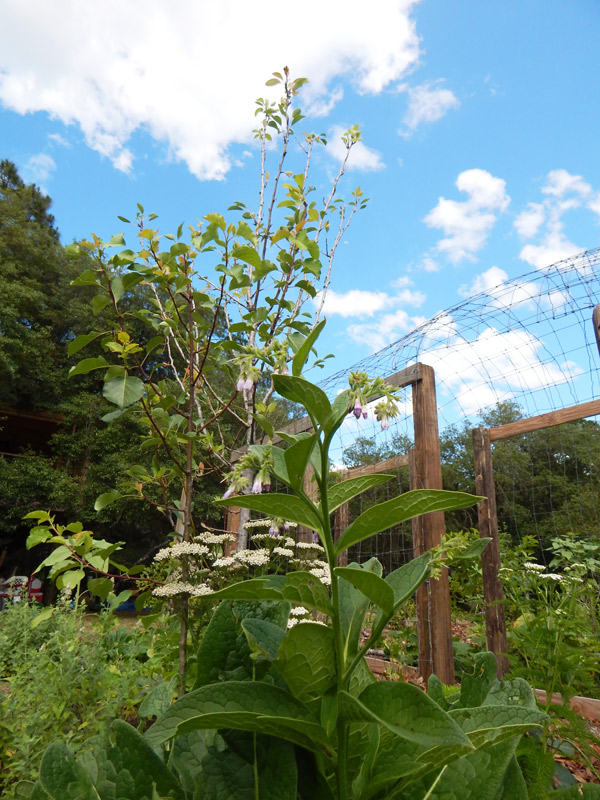
In the mix as well is some thriving yarrow. Tucked in nearby are a few healthy summer squash vines:

And a psychopathic gnome:

Also nearby are some arrowroot plants, just emerging from their winter slumber:

If you don’t have arrowroot, come see me at the 326 Community Market; or, if you’re further away, you can pick some up online in the winter from Grower Jim.
Look, anyone can grow a garden. When you prep the soil properly and apply water regularly, plants will grow. It may take a while to figure out what is going to thrive, so do like Sam did: plant a bunch of different things and tweak as you go. This garden is just a testing ground for him before he opens up some larger acreage for a food forest.
His permaculture testing ground looks a lot better than most people’s regular gardens.
And, of course, if you’re interested in diving into permaculture gardening in Florida, pick up a copy of my book Create Your Own Florida Food Forest on Amazon for $2.99 in Kindle version or $6.99 for the paperback.
And if your soil is bad and you need to kickstart it without killing yourself or going broke, pick up a copy of Compost Everything: The Good Guide to Composting.
Whatever you do, don’t give up… even if you’re in the scrub. Sam’s garden proves the power of permaculture!
Support this site: shop on Amazon using this link. It doesn’t cost you a penny and it helps pay for my hosting!