Last week we potted up 50 bare root Chickasaw plum seedlings.
The Chickasaw plum was a common species in the Ocala area, along with its cousin the flatwoods plum. We had both species volunteer in the Great North Florida Food Forest Project. I also deliberately planted a Chickasaw plum in the middle of the food forest – and grafted other stone fruit onto it:
Here in Lower Alabama we are growing Bruce, Gold and Methley plums, and we’ve also planted some wild Prunus americana plums that I started from the pits of fruit harvested by the roadside at the border of Tennessee.


Those were really good sweet-tart plums. Rachel made amazing jam from them.
From the pits we started around 70-100 trees, of which we probably sold fifty in our nursery.
Cultivated plums are subject to multiple maladies here in the South, but our little native plums seem to shrug off those issues.
The Alabama Extension has some good info on our native plums in this post.
There are five species of wild plum in Alabama, varying in size, range, and quality of fruit. Ranging from low thicket forming shrubs to medium sized trees, wild plum offer excellent fruiting and flowering potential for many situations across the state. All of Alabama’s wild plums produce fruit that is excellent for wildlife and many species of pollinating insect visit the flowers.
Thicket-Forming Plums
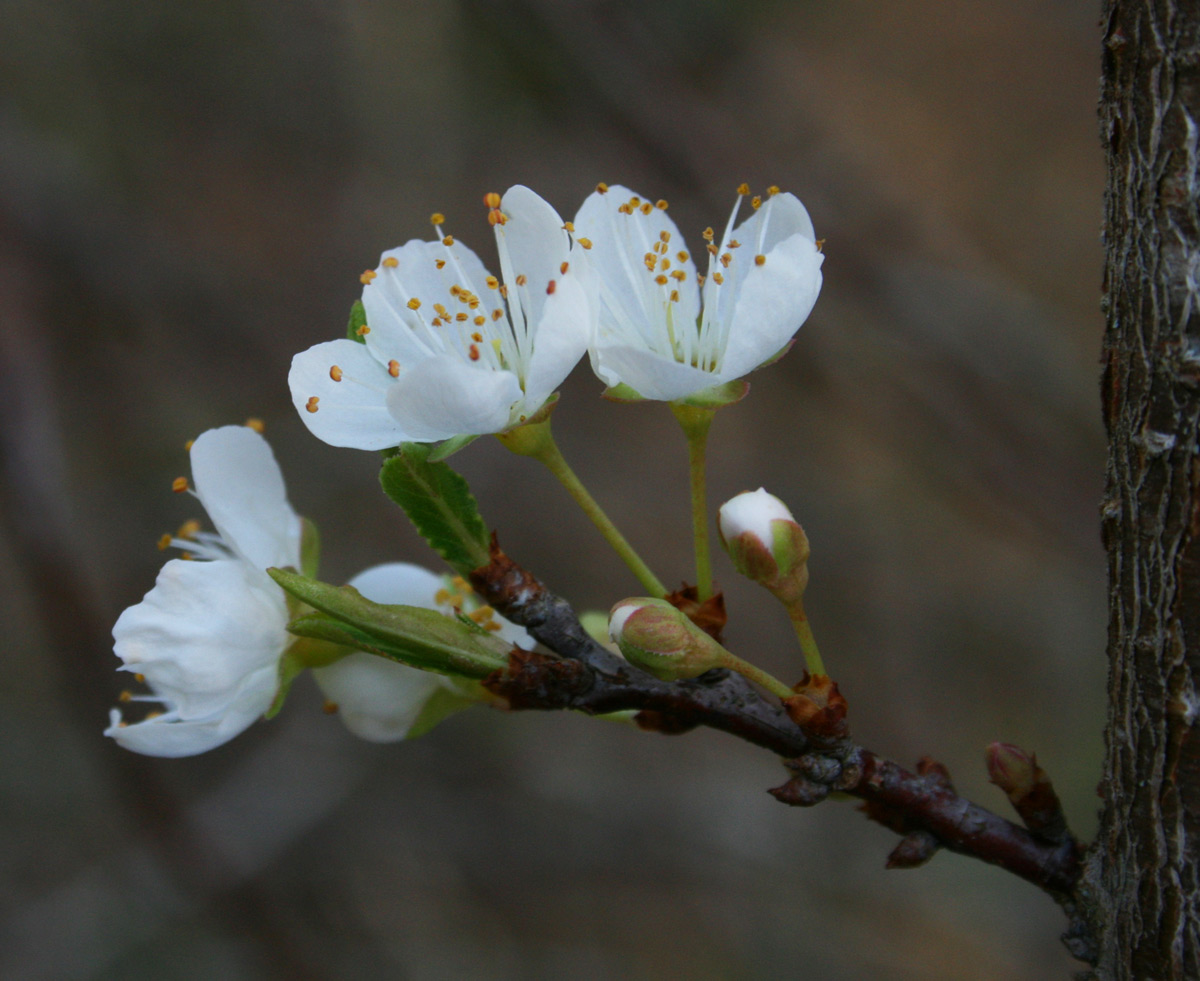
American wild plum (Prunus americana), hog plum (P. umbellata), and Chickasaw plum (P. angustifolia) are low growing, thicket forming species. Regular hybridization makes field identification difficult, but all share a number of similar traits. All three are generally less than 20 feet tall, and thrive in a range of habitats from rocky or sandy uplands to richer soils and bottomlands. The bark is generally tight and smooth on young stems but becomes craggy with age. The leaves are often small. The flowers are small, white, and appear early in the year—often before the foliage. The fruits range from yellow to red or deep purple at ripeness and are ready by mid to late summer. It should be noted that of these species the American wild plum can be maintained as a stand alone tree fairly easily.
Tree-forming Plums
Mexican plum (P. mexicana) and wild goose plum (P. munsoniana) are both larger species of wild plum, often growing to nearly 30 or 40 feet in height. The wild goose plum is uncommon in Alabama, found only in scattered sites in the northern part of the state, whereas Mexican plum is more widespread. Foliage and bark are similar to the other species, with Mexican plum having larger flowers.
Perhaps if we manage to kill off all the popcorn trees by the pond, we can replace them with wild plums!
