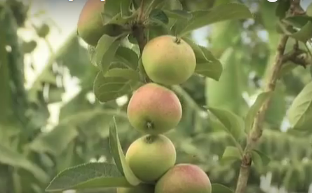
Contrary to popular belief, apple trees (Malus domestica) can grow and produce fruit in Louisiana. In fact, apples have historically prospered in home orchards throughout much of the state. A century ago, Louisiana nurseries marketed a wide variety of apple trees recommended for Louisiana home orchards. Today, only a few apple varieties with comparatively low chill requirements are marketed to home growers in Louisiana. Fueled by a renaissance in old Southern varieties, the LSU AgCenter’s efforts to identify and test old Southern apple varieties are paving the way for better, tastier options for modern home orchards.
European colonists brought the first apple seeds to North America in the 1600s. By the early 20th century, there were an estimated 17,000 named apple cultivars in circulation. Today, only a few hundred of those old varieties remain available. Before railroads, an interstate trucking system and modern fruit storage allowed for a steady supply of apples from Washington, Michigan and New York to be delivered to the rest of the nation, most farms and homesteads in the southern United States, including the Deep South, kept a small fruit orchard, and apples were a popular crop. A century ago, apples were a more versatile, utilitarian crop than today. Rather than raising apples merely for fresh eating, home growers prized apples for making cider, frying, baking in pies and cakes, and drying to store for wintertime sustenance. Farmers also used them to feed horses, pigs and other livestock.
Unfortunately, trees from this era are mostly gone except for the few that have survived descendants selling off farmland and urbanization. A few old apple trees have been found in northern Louisiana. One apple tree in Union Parish is a root sprout off a tree brought to Louisiana from Alabama in the early 1900s and consistently produces beautiful red apples that ripen in July.
Cultivating apples in Louisiana demands diligence because of high maintenance needs from pest and disease pressure…
I came across this article while reading on the old Horse apple that used to be grown across the South. We have a limited amount of them coming into the store as bare root trees this week. We’ve had one growing for three years now behind the house and it produced its first apple last year.
In a few weeks I’ll be grafting more Shell and other Southern apples with Randall White of the Flomaton Famous YouTube channel.
I was also able to get some Ein Shemer trees at the shop (and one for the yard). My friend Derek reported that his tree was very productive on his homestead a little southeast of us. Let’s go!
The South isn’t perfectly adapted to apples, but it’s not impossible. Especially when you skip the mainstream commercial varieties from up north and dig into the South’s apple-growing past. Prohibition KILLED a lot of apple growing, destroying many orchards and varieties once used for hard cider (which is the only REAL cider).

3 comments
There is a book called “Old Southern Apples” by Creighton Lee Calhoun which is a great resource for anyone interested in the old southern varieties and the history. It lists over 1600 historic southern varieties.
It can be very hard to find and often very expensive but copies will pop up at decent prices if you watch for it.
Dorsett Golden is a great early yellow apple for the Deep South. I’m not sure or exact chill hours required anymore but we’ve had one for over 20 years. Produces heavy late May early June great yellow eating apples. I’m zone 8/9 in south Texas Hill Country
That is excellent. I’ve planted the variety multiple times but keep moving. :(
Comments are closed.