

The Master Gardener Controversy Rages On!
I knew when I posted my Why Becoming a Master Gardener isn’t Worth It post that it was bound to raise a little controversy.
Well, it’s happened, though a little later than I thought.
A few days ago my post received this in-depth comment from Sharon J. Collman of the Washington State University Master Gardening Program:
“Sorry you had a bad experience or that the program wasn’t what you wanted. I’m a founder of the first pilot WSU Master Gardener Program in WA state. Just looked at the stats and it has spread across the US and Canada. In my county we have 370 dedicated MG volunteer educators. They are not working for government, they are volunteer educators tackling issues in their county, from proper pruning of trees, to reducing pesticide use and gardening practices that degrade water quality, composting and yes, answering the questions from the public about all aspects of gardening. We have a mix of gardeners and a few commercial landscapers who volunteered 30,000 hours IN THEIR communities. Many of our gardeners are great gardeners and work in demonstration garden where the public can come learn, some teach kids in schools or after school groups, others speak at garden clubs. While they are not able to promote their business when serving as a Master Gardener, they are allowed to mention that they are master gardeners among their other qualifications. Three hours per topic (lawns, soils, water quality, small trees, shrubs, vegetables, entomology, plant pathology, weeds, diagnosis, etc. doesn’t an expert make. It is a launching point. It is in applying the knowledge and answering questions that they really begin to learn. I would take a committed novice over an experienced gardener who already “knows it all” in a heartbeat because one is open to new information and knows what it’s like to want information, the other is often closed in mind and willingness to update their knowledge based on new research and are too willing to share there outdated information. Our volunteers serve 50 hours each of two years to earn their permanent name badge. Many get their 100-hour pin in the first year and many have served 5, 10, 20. and 30 years (taking a minimum of 10 hours of continuing education each year). They become better and more valuable as they grow over time. (Don’t we all.) They aren’t doing this for me or for the government (though I don’t think of universities as “government”), it’s simply a way for them to give and strengthen their communities. It is inspiring to seen new a new sense of community grow as people come together to create food bank and community gardens. Something sorely missing in our society. Not all states are equal in what they ask of volunteers so I’m not saying your experience couldn’t have happened. Maybe that’s all the more reason to join, get to know people and build the quality of your community program. To paraphrase Henry Ford, whether you think you can or think you can’t, you are right. Check out our State MG Website for more information.”
Sharon is who she claims to be – her name features prominently in the launch of the WSU Master Gardener Program.
I’m sure that the two of us could be great friends, just as I’m friends with many of the local Master Gardeners here in Florida. Yet I must respond.
The Master Gardener Controversy
In her comment, Sharon provides a bunch of nice features of being a Master Gardener (volunteering in the community, disseminating information, etc.), yet mostly dodges the big stuff. To her credit, she does address the volunteering/not making money thing, though that may vary in her state as opposed to Florida (according to what I heard at our Extension, I couldn’t list “Master Gardener” as one of my accreditations when running my plant nursery). However, she doesn’t really address my following points.
- Master Gardeners are information distribution points for the State/Universities/Big Agribusinesses.
- Master Gardeners generally know little about organic practices, permaculture, building complete ecosystems, food forests, farming or even vegetable gardening.
- Master Gardeners generally have little interest in things you can actually use. Mostly, they grew and shared plants that consumed resources, not plants that were resources.
- Master Gardeners are muzzled by big agricultural companies – companies that create poison like this.
- Master Gardeners love their rulebooks, not experimentation
She takes a little jab at my experienced gardener status too, noting:
“I would take a committed novice over an experienced gardener who already “knows it all” in a heartbeat because one is open to new information and knows what it’s like to want information, the other is often closed in mind and willingness to update their knowledge based on new research and are too willing to share there outdated information.”
Personally, I’m happy with experienced gardeners or committed novices. My readers are all over the spectrum; however, they can take or leave what I have to say here and aren’t required to share a narrow rule book such as that provided by the Agricultural Extensions.
This narrow rule book often skips over potential hazards to your garden from government and big business, while encouraging the use of pesticides. Our local Master Gardener plant clinic handed out pesticide recommendations like conventional doctors prescribe pharmaceuticals.
Yeah, they always said to “use according to directions” but I never heard anyone warn that using any pesticides will kill bees, useful insects, soil life and generally disrupt the self-managing nature of a healthy ecosystem.
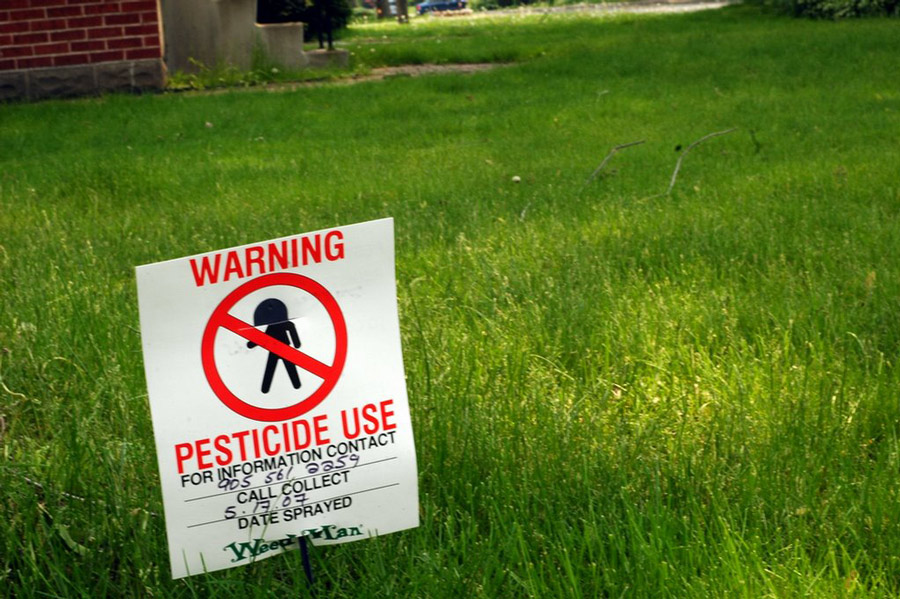
Photo credit Peter Organisciak
I do want to say this: I have nothing against Sharon and I wish her the very best and congratulate her on years of service.
That said, I still argue that for gardeners that wish to grow food without toxins, speak their minds, experiment and not be part of promoting the government/big agriculture alliance, skip the local Master Gardener Program and start reading and experimenting instead.
The community the Master Gardeners offer is, in my experience, more of a retiree social club that does some stuff with ornamentals than a serious food-growing group or even a group of plant geeks sharing neat tricks.
My advice: just say no to ChemLawn crusaders and purveyors of boring ornamentals.
That is the path to the dark side.


6 comments
“The community the Master Gardeners offer is, in my experience, more of a retiree social club that does some stuff with ornamentals than a serious food-growing group or even a group of plant geeks sharing neat tricks.
My advice: just say no to ChemLawn crusaders and purveyors of boring ornamentals.
That is the path to the dark side.”
Hear, hear David! You have once again hit the nail on the head. You put it forth in a concise well thought out way without casting aspersions against any individual.
Karl
Not that is has relevance to your post but I thought this might be funny…
I’m an eBay seller and a recent buyer bought some miracle fruit seeds from me and failed to germinate them. So this person asked for their money back exclaiming that my seeds were rotten. Furthermore she said her mother whom she gave the seeds to to start for her was a master gardener and it was impossible that if the seeds were viable that she could fail…right.
So I said sorry but the seeds are viable and I will not refund but will replace the seeds if you wanted to try again. She promptly declined my offer and left malicious feedback. Warning further customers I’m rude and that my seeds are no good.
However I hand clean fresh picked berries to order and it is IMPOSSIBLE that my seeds are not viable. Guess some people feel just cause your a master gardener you cannot ever fail with any seed…okay whatever. I’m not a master gardener but I’ve started some of the most touchy rare plants on Earth from seed and albeit I do good I too often fail miserably. Some people just can’t admit fault I guess.
Ridiculous…
“Master Gardeners love their rulebooks, ”
If you thought being between a leftist and something that could be taxed is dangerous just try to separate jewish lesbians and rulebooks.
David, I agree with Karl above. I was a Master Gardener for a number of years and enjoyed much of the experience and social contact. It is true that most members tend to be older but maturity is not a bad thing. Many joined because they were under the perception (misconception?) that it would be the best way to learn and gain experience and to be honest, that can be true to some degree AND in the course of their routine duties, they do perform many beneficial civic activities. However, it has also been my experience that most members are primarily interested in landscaping flowers and commercial fertilizers and THAT is frustrating to me. On several occasions I mentioned organic alternatives, food purposed plants vs. landscaping varieties (both attributes are possible as you know), soil building beyond simple composting such as mycorhizza vs. bacteria, etc., food forests and many of the permaculture concepts. There were some positive, although usually confused responses, but sadly, I don’t think I swayed anyone’s thinking (maybe over time?).Beyond the general frustration I was developing the one thing that really drove me out was a new “regulation” that some bureaucrat felt was needed: ALL members must sign a document saying they will not take drugs, drink alcohol, or be under the influence while participating in any MG activities. REALLY?! Was that necessary? We had no instances of those abuses that I’m aware of. Would signing a document prevent anyone from ever doing it? I don’t see how. I believe that a very high (99-100%) of those members are responsible enough not to commit those ‘crimes’. And even if they weren’t, the asinine paper does absolutely nothing except insult responsible adults.
However, I am still friends with the individuals that belong to that group. We still talk plants, pests, and the like, and swap free plants with each other and get along.
Hopefully, over time we can slowly move past and current harmful practices to ones that follow the permaculture ethics of “Earth care, People care, and Fair share”.
You did a brave thing and I believe you are still in a good place. Blessings to you.
David,
WSU is my alma mater. It was WSC when I graduated.
You must realize that WSU was/is an agricultural school. The weather there is extremely dry.
Very hot in the summer (over 100) and very cold in the winter (below zero). It could not be
more different than here in SW FL.
They consider themselves to be the “ultimate and only correct” institution on agriculture.
The emphasis is and always will be on agriculture. A degree in grape growing and vineyards
has also been added in the last few years.
No, I was not an Ag student, but most everyone I knew was…….and they are always correct!!!!!
I will take SW FL any day !!!!!
More of a gourmet, wealth-conscious social club that looks the other way on Master Gardener “officers” padding their volunteer hours and tweaking out the sweatier, skinnier poorer members. I really did try for 5 years. Much happier collecting food seeds and trees from Parks & Recreation.
Comments are closed.