
On Saturday at our brick-and-mortar store I sent three different mulberry trees home with a wonderful couple.
They picked out a white-fruited mulberry with honey-sweet berries, a Thai Dwarf and a beautiful Rachel mulberry.
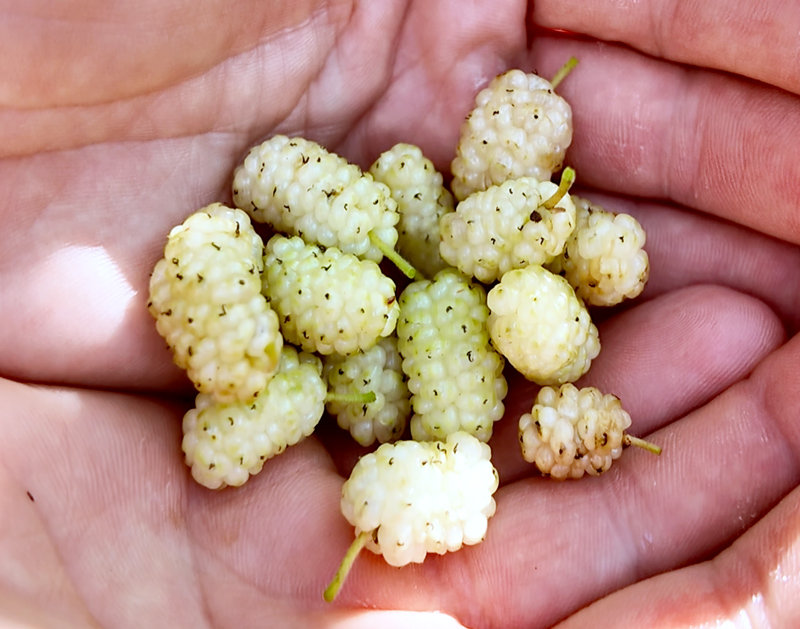
Our white mulberries.
We love mulberries because they grow easily, fruit fast and are beautiful in the yard or food forest. We learned this through experience, and now have about twenty growing on our property.
Over the years, we’ve tried a lot of different trees in our food forest projects. We’ve planted fruit trees in Tennessee, in Alabama, in Georgia, in North and South Florida, and in the Caribbean.
Our successes and failures teach us a lot, and also provide “in the ground” knowledge for my gardening books.
In Create Your Own Florida Food Forest, I share a lot of species that do great in North and South Florida. This knowledge came through planting and testing over the years.
Sometimes you’ll hear about a “must-have” permaculture plant, get really excited, and then when you try it in your own backyard, it bites the dust.
Other times, it turns out even better than advertised! The same goes for different methods of growing, tools and other experiments.
Let’s look at five of our great successes… and three failures.
Five Food Forest Successes
Here are five food forest wins.
THE KEY LIME MICROCLIMATE
In North Florida it’s impossible to grow key lime trees out in the open. The overnight low temperatures are just too cold most winters.
A friend had one growing in his yard near us and every single year it froze back and never fruited.
We decided to try planting one anyway. But we planted it by the south-facing wall of our block house.
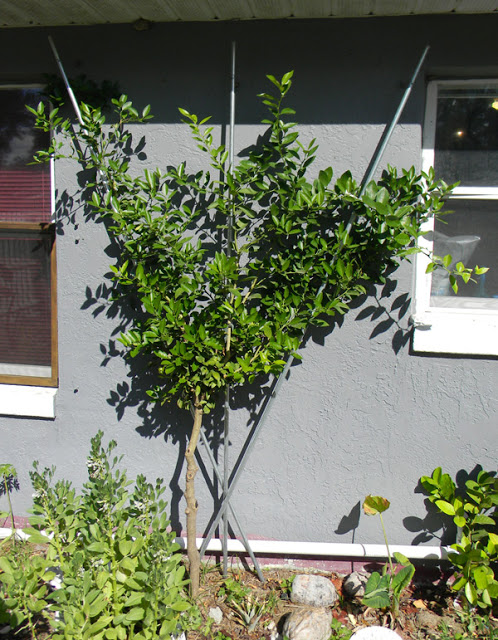
I planted it about four feet from the wall. The first winter, half of it froze off. But not all of the top, like you’d expect! Nope. Instead, the side of the tree farther from the house froze off – yet the side closer to the wall stayed green! Seeing this, we dug it up and planted it RIGHT next to the wall and pruned it like a fan shape, tying the branches to some metal conduit we attached to the wall. From then on, it never froze again and gave us fresh key limes every year.

Success!
THE SHELL APPLE
For years we tried growing apples in the Deep South with limited success. Then I met Randall White, who runs the Flomaton Famous YouTube channel. Down the road from us here in Lower Alabama, he was growing an apple tree organically that fruited abundantly every year. The variety is called “Shell,” and it thrives despite our poor climate for apples. We’ve now planted multiple in our yard and they don’t seem to mind the cold, the heat, the bugs, or the diseases endemic in the South.
This spring I grafted 300 of them to sell at Atmore Farm & Garden so other people could try the variety.
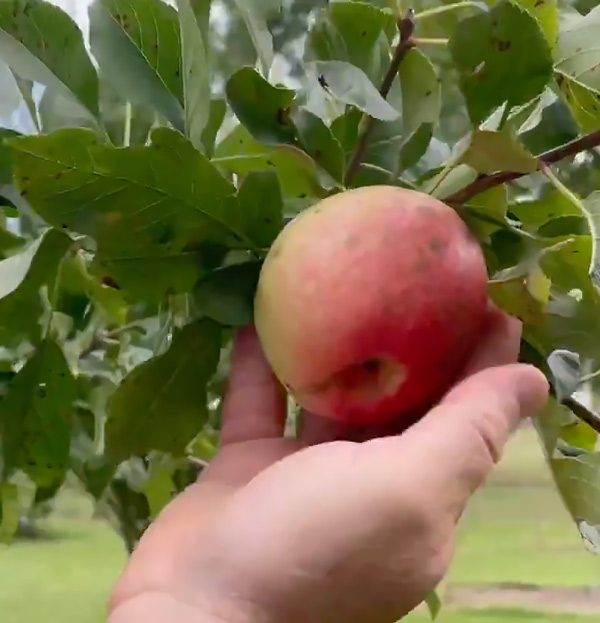
We’ve since sold about a third of those trees and the demand keeps growing. Can you grow apples in the South? Yep! You just need a type that actually likes to live here!
Success!
THE GROCERY ROW GARDENS
Seven years ago I started an experimental gardening method I later named “Grocery Row Gardening.” In it, we mixed well-pruned fruit trees with vegetables, flowers, berries, root crops and herbs, all planted together in 4′ wide beds with 3′ wide paths in between them. Think of it like a series of food-bearing mixed hedges, or multiple strips of linear food forests, kept in check by winter and summer pruning so the trees stay small and don’t shade out all the species growing beneath them.
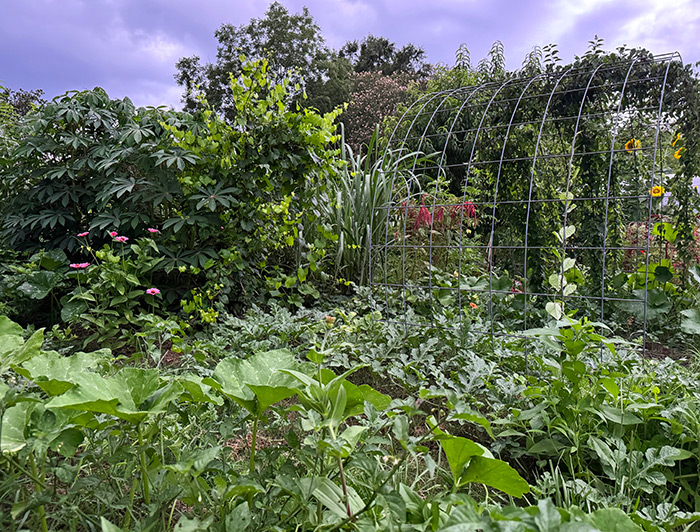
The Grocery Row Garden is both beautiful and productive.
Now we have some really happy plants and many other people are using the system as well.
Success!
JAPANESE PERSIMMONS
Late frosts harm many trees and shrubs here in the Deep South. Warm weather induces blooming, and then a late frost freezes the flowers off, keeping us from consistent yields. Japanese persimmons like “Fuyu” and “Hachiya” don’t mind the cold, but they also can take the heat, and they come out of dormancy late, giving us more consistent yields than our plums, peaches and blueberries.
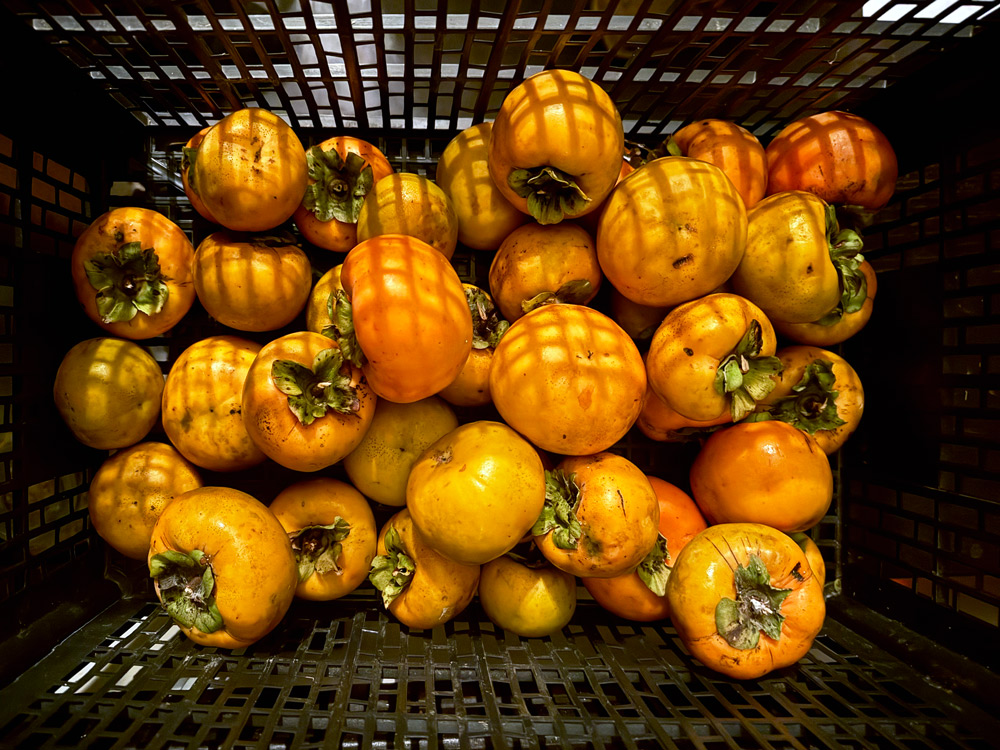
As a bonus, the fruit are absolutely delicious. Like honey and sunshine. Since we had great success with our first plantings, we’ve added another half-dozen through the food forest. In a few years, we’ll be hauling in ridiculous amounts of fruit.
Success!
USING WEEDS FOR CHOP AND DROP
For years we fought to exclude the weedy trees, shrubs, weeds and grasses that volunteered in our food forest projects. Now, we’ve learned to just use them to build soil. If a black cherry or a mimosa or a patch of goldenrod show up, we slash it down and throw the branches and leaves on the nearest fruit tree.
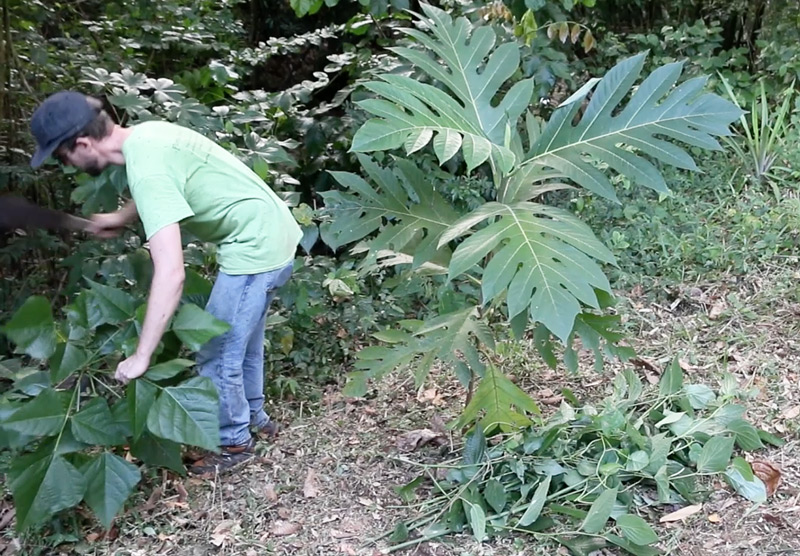
Chopping and dropping wild trees and feeding them to a breadnut tree in Grenada.
We also mow wide paths with our old zero-turn mower and shoot the clippings onto our food forest islands as free mulch. We could crush them all under cardboard and plant more “useful” species instead, especially if we were trying to get maximum yields, but we are short on time and mulch so we just turn the weeds into food for the soil. We cut again and again, throwing them around trees, and the soil is getting better every year.
Success!
Three Food Forest Failures
This is where things get painful… and even heartbreaking.
JAKE’S SEEDLING
We planted multiple varieties of Southern apple to see if we could find any more winners like “Shell.” One of the varieties we gat was called “Jake’s Seedling.”
Someone was helping me clean up the apple orchard one day and accidentally completely girdled the Jake’s Seedling apple. It had been growing great and seemed to survive the heat and the cold well… until it bit the dust with one careless movement. Rest in peace.
Failure!
COMFREY
Comfrey is one of those Swiss Army knife plants that every permaculture book recommends. We got a dozen of them to plant in our yard. Out of all those, only a couple lived. It turns out comfrey isn’t a big fan of our burning hot summers and sandy soil. The ones that lived were in moister areas with dappled shade.
Now we only plant them out of direct sun, but even then, they don’t live up to expectations here in Florida and Lower Alabama.
Failure!
THE COCONUT PALM
When I was fifteen I planted my first fruit tree in my parents’ Ft. Lauderdale yard. It was a coconut seedling I got from my grandpop. Three decades later, it was a tall, stately tree that regularly bore large clusters of coconuts.

Coconut palm, back left. RIP
Until this last month when some tree guys told my mom it “had termites” and needed to be cut down. Without thinking to ask me, she gave them permission to remove it.
When I found out, I was sick over it.
I loved that tree, and it was the first fruiting tree in our South Florida food forest, as well as being the first tree I ever planted. Since I don’t live there, I didn’t have a chance to save it. That’s the way life is sometimes. Despite our care and love for trees, sometimes other people don’t have the same love. Mom didn’t know and trusted the arborists, so I don’t blame her. I have my doubts about the termites but we’ll never know. Goodbye, sweet coconut water… goodbye first tree.
Failure!
We learn from our failures and successes.
I’ve gotten a lot of great information from books and other gardeners, but actually getting out there and growing things taught me more than anything else.
If you live in zone 8-11, the knowledge I put into Create Your Own Florida food forest should help you get started. If you don’t live in that region, no worries! I’ve also created a course on food forests that isn’t dependent on climate. Instead, we cover the easy way to put a food forest in based on designing by height and type of tree. If you’d like to jump in, sign up for my Skool Group here and watch my complete food forest video course.
Or, if you’re in Zones 8-11, get a copy of Create Your Own Florida Food Forest.

5 comments
sorry to hear about the coconut palm. crazy world forces may try to pile up setbacks and discourage people, but i’m sure you got some good work to do. thanks for sharing.
Thank you, Jeff.
Lover of persimmons as well. Try” saijo” variety if you get the chance. We are on the line of 10a and 9b.
Thank you for sharing. Few people show their failures on social media and it is refreshing to see it here.
Do you find that Japanese persimmons are slow to take off compared to other fruit trees in our zone 8/9 climate? It took a solid two years after planting my grafted “Chocolate” persimmon to really show a significant amount of new growth.
My first couple of persimmon trees took their time to get going, but the new ones that I planted in our Alabama food forest are growing faster. Not sure why – maybe better soil or water here.
Comments are closed.