Organic gardeners are sometimes trapped by their philosophy.
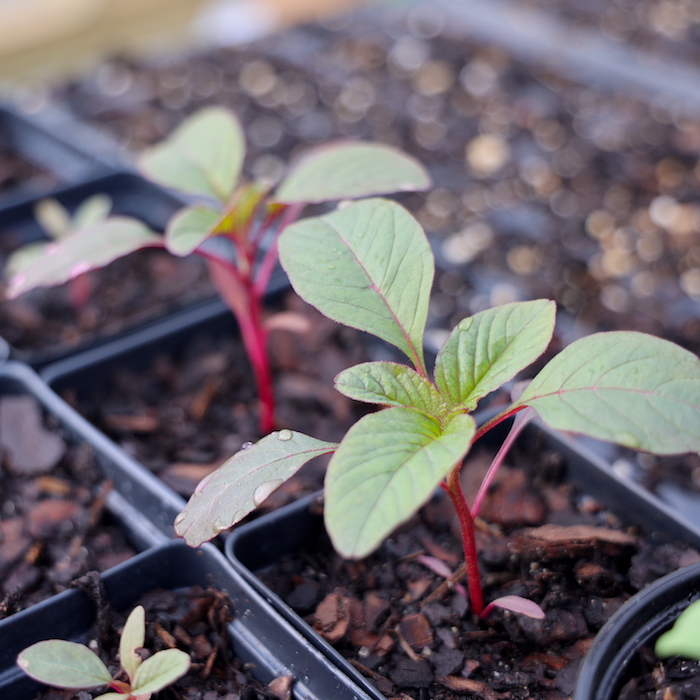
Over the years I have seen some organic nurseries and homesteads where plants are small, yellowing and unhappy.
This is a repeating problem. Earlier this week, a gardener’s mother came up.
“She always has great big plants that are green and happy. She’s a green thumb! Of course, she uses MiracleGro…”
Meanwhile, multiple plants in this organic gardener’s yard were struggling with nutrient deficiencies. Another time, I visited a nursery booth at a homesteading event and saw some of the saddest perennials and vegetable transplants I’d ever seen. All organically grown. They were spindly and yellow, struggling to survive.
It isn’t wrong to avoid using chemical fertilizers. And we don’t use pesticides on our plants at all. Yet you do have to give plants some sort of “food” in order for them to reach their genetic capacity.
This is particularly true with potted plants, as their roots are quite constrained and there is only so much they can use in a single pot of dirt.
Here in Lower Alabama and through much of Florida, plants are often growing in acid sand with low nutrient content with terrible cation exchange and almost no organic matter.
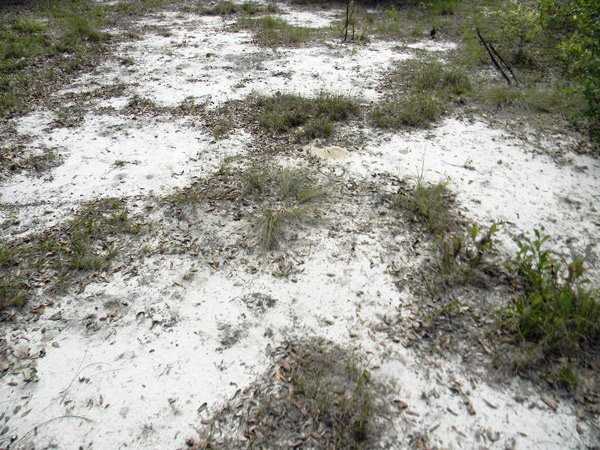
Some plants can take it and are adapted to these conditions, but many others are not. I’ve seen some really sad peach, plum, apple and other trees struggling to grow in the sand.
I remember asking one gardener how old his plum tree was and he said “three years.” It was a sickly, gnarled, lichen-covered shrub that was just over waist-height. At three years! A plum that age should be 10′ tall with a thick trunk and green leaves. Not a red-yellow leafed shrub that looks like it was planted in the tailings of a uranium mine.
There are many ways to fix this problem via organic means, but they do take some time and effort, especially compared to the MiracleGro approach. With MiracleGro and other non-organic fertilizers, you can see results in a week. Organic doesn’t usually work that way, unless you’re making teas from blood meal, urine, strong compost or manure.
Building the Soil is Key
Generally, the organic approach is to build up the soil. You can add cottonseed meal, alfalfa pellets, seaweed, bone meal, ashes, biochar, lime, manure, etc., along with mulch, and get great results with fruit trees and vegetables.
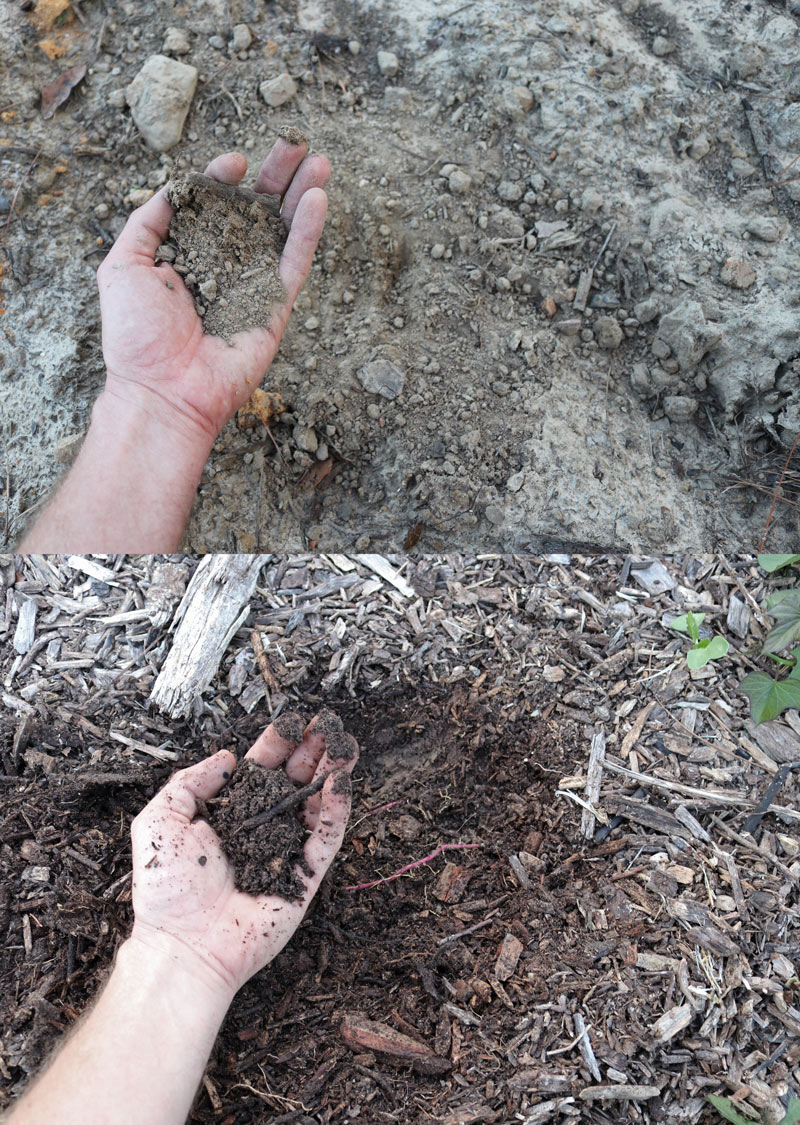 Building the soil in our area isn’t easy, however. It takes regular inputs. Deep layers of mulch help a lot, but they do have to be reapplied. And sometimes if you use the wrong mulch, it doesn’t help at all.
We once tried using old pine chips from pulped trees to grow trees. They did not like that at all and grew sickly and yellow. Yet when we used mixed hardwood chips from a tree company our plants and trees did much better. We grew these sweet potatoes the year after putting down lots of mulch in our North Florida food forest. They pretty much just grew in rotten mulch and sand without any fertilizer.

If your trees and plants are sickly and yellow and often struggle with pests, changes are they are starving.
Around here, the soil probably needs lime and some serious amending.
In the next year, they should do much better.
Triage NOW!
Yet gardeners should give struggling plants a “hit” of something now. You can do that organically, or you can just mix up some MiracleGro, DynaGrow, Peter’s Plant Food or whatever and just get them going. I used to be completely against this sort of intervention, yet after many conversations with Steve Solomon I am no longer an organic purist. If a plant isn’t thriving, we want to get it going, and that may mean doing an intervention. Think of it like giving a dehydrated person an IV. Deal with the immediate crisis, then work on getting that person to pursue overall health.
Don’t skip the mulching and the soil-building, but you can intervene if your plants are struggling. We invest a lot of time in our nursery, gardens and food forest projects. Letting all that time, money and effort go down the drain doesn’t make sense. Chances are, the ground wasn’t prepared well enough to begin with. You can do better with that. But by not intervening now, you are letting the plant suffer. And suffering plants do not produce good crops. Trees and shrubs can get along and catch up later sometimes, but vegetables and potted plants will just give up or give you pathetic yields.
The first goal is to grow food. Keep that in mind and do what you need to do to get through a crisis, then work on building better systems for the future so you aren’t having to hit up the local Farm & Garden store for MiracleGro.
If you do just use the sand without amending it, you can grow crops via watering with these products. It will work, and you can get good harvests. The quality of the produce can even be excellent. Remember, chemical fertilizers are just elements, and plants don’t care much where they get their elements from. The soil life doesn’t seem to either. Some recent data on this has been quite interesting:
We would rather avoid buying nutrients and compost everything, closing the loop on our homestead. Yet if you’re having trouble growing food, don’t be afraid to use some chemical fertilizers to fill the gap until you get your systems working properly.
It’s better to have food than it is to grimly stick to something that isn’t working.
Don’t get me wrong: your organic gardening will work if you get things balanced and the soil fixed up, but that might leave you hungry right now. It’s not nice to let your plants suffer either. Get over the hump, then work on building that soil.
